


The Pediatric and Big-kid Belt Canes
Child's Mobility Tool for Orientation & Mobility Skills
The Pediatric and Big-kid Belt Cane frames enable toddlers to big kids with a mobility visual impairment or blindness (MVI/B) to move knowing their next step.


THE DEVICE
What makes self-reliant moving possible?
Simple by design. Powerful in use. A wearable white cane system that keeps the next step clear through extended touch feedback as the blind child moves.

Worn at the waist
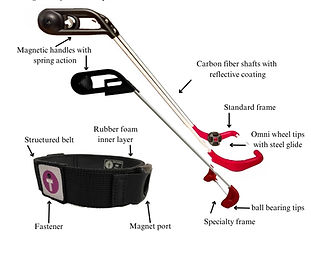
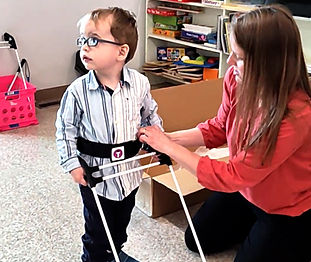
A structured belt keeps the cane frame in place — the child with a mobility visual impairment or blindness can move hands-free.
Protected next step
The rectangular shape combined with omni wheel tips, ensures the MVI/B child knows its safe to keep going, before they step.
Built for real environments
Interchangeable cane frames glide across surfaces — indoors, outdoors, and everywhere in between.
Big-kid Belt Canes
The Belt Cane Grows with Your Child
As MVI/B children grow, their mobility needs change—but their need for safe, independent movement remains the same. The Big-kid Belt Cane extends the benefits of extended touch feedback to older children and teens, helping them explore school, home, and community environments with greater confidence and independence.
Designed for children who:
-
Have a hip (waist) circumference greater than 25 inches
-
Measure more than 37 inches from the hip to the shoulder
-
Need a larger Belt Cane to match their growth and mobility needs
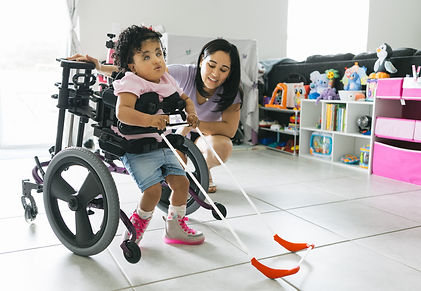
The Big-kid Belt Cane is also designed to work alongside other mobility and positioning equipment, including gait trainers and walkers, allowing more children to benefit from safe, independent mobility.


THE JOURNEY
From external support to independent movement.
Children with a mobility visual impairment rely on touch for balance and orientation. Without consistent feedback, they naturally seek hands, walls, or furniture for stability.
The Belt Cane provides continuous tactile feedback just ahead of the MVI/B child — so they can move away from external supports and explore their environment with confidence. Over time, movement shifts from being guided to being self-initiated. The only Belt Cane for toddlers and Big-kids.
*We help families and professionals with documentation, funding, and system navigation.
Preguntas frecuentes

The shape preserves the MVI/B child's next step.

Belt connects to frame with magnets for proper position.

Carbon fiber frames & omni wheel tips precision feedback.
_edited.jpg)
Designed to roll over varied surfaces for continuous feedback.
Features designed for independent movement
Each component supports balance, orientation, and continuous tactile feedback throughout the child’s day.

Sized for each stage of development
Adjustable belt and cane lengths support growing children from toddler to early school age.

High-visibility design for safety and awareness
Improves visibility in shared environments and low-light settings.
.jpg)
Dual-frame system for touch-informed walking
Two interchangeable cane frames help maintain continuous tactile guidance as the MVI/B child moves through different environments.

Comfortable grip for optional hand contact
Designed for small hands, but children can also move freely without holding it to maintain balance and exploration.

Lightweight structure for continuous movement
Custom-cut carbon fiber frames support steady, fatigue-free exploration.
Designed for use within daily routines
Parents and professionals can integrate the Belt Cane into everyday activities with guidance from Safe Toddles instructional support.
Need help getting started? Contact Safe Toddles support.
Benefits of Early Introduction of
the Pediatric Belt Cane
Early, consistent touch-based feedback supports independent movement, confidence, and engagement in everyday environments.
Increased Independence
Children begin to initiate movement more independently as they receive consistent feedback while exploring their environment.
Improved Cognition
With greater confidence in movement, children are more likely to engage in play, exploration, and learning activities.
Reduced Risk of Injury
Continuous forward feedback helps children detect obstacles earlier, supporting safer movement through shared spaces.
Improved Social Skills
As mobility increases, children are more likely to approach peers, participate in play, and engage with family members.
Why Belt Canes instead of handheld devices
Handheld tools require a set of skills before they work correctly. The Belt Cane starts working as soon as it is fastened. The cane frame immediately providing consistent, body-centered feedback that supports independent movement throughout the day.
Children who are blind or have a mobility visual impairment rely on touch for balance and orientation.
Handheld mobility devices depend on active use and adult guidance. When the hand is released, feedback and support often stop.
The Belt Cane stays with the child—providing continuous tactile feedback as they move, turn, and explore their environment.
This consistent input supports more natural, self-initiated movement across daily activities.
Why the Cane Frame Matters
The cane frame reaches the world before the blind child’s body does. That is why we are asking the public to recognize visible mobility tools as access, safety, and pride.

GET A PEDRIACTRIC BELT CANE
Choose your next step.
We'll guide you through every step — from sizing to funding to documentation.


