top of page


Balanced, Protected, and Informed O&M for Active Daily Living
Dr. Grace Ambrose-Zaken


Why Pediatric Belt Canes Improve Mobility: A Guide to Pediatric Mobility Aids
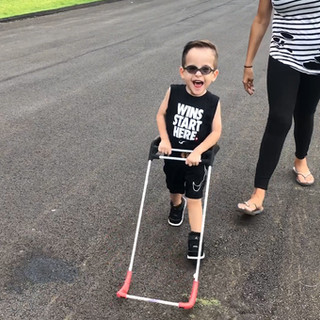
When it comes to helping children with visual impairments navigate the world safely and confidently, the right tools make all the difference. Pediatric mobility aids are designed specifically to meet the unique needs of young users. Among these aids, one stands out for its practicality and effectiveness: the pediatric belt cane. This tool is more than just a cane; it’s a bridge to independence, safety, and confidence for children learning to move through their environment.
Grace Ambrose-Zaken
Dec 1, 2025


Thankful for Pediatric Belt Canes Supporting Early Mobility
Mobility tools for children with visual impairments or blindness are tailored to their unique needs. Unlike adult devices, pediatric tools consider size, weight, and the developmental stage of the child. The Pediatric Belt Cane is a perfect example. It’s lightweight, easy to handle, and designed for children.
Grace Ambrose-Zaken
Nov 28, 2025


Your Blind Child Isn’t being “Bad” — The Cane Is Too Difficult to Swing Each Step
If your blind child resists using their cane, it’s not defiance — it’s design. Many young children struggle to swing a traditional long cane safely or effectively. Learn the five signs your blind child’s cane or mobility device isn’t right and discover how the Pediatric Belt Cane can help them walk confidently, safely, and independently.
Grace Ambrose-Zaken
Nov 4, 2025


The William G. and Helen C. Hoffman Foundation Renews Support for Safe Toddles with a $30,000 Grant to Advance Early Mobility for Blind Children
Safe Toddles receives a $30,000 grant from the William G. and Helen C. Hoffman Foundation—their second year of support—to expand early mobility access for blind children through Pediatric Belt Canes, training, and family outreach.
Beaux Jettson
Oct 10, 2025


🛝 Accessible Play Starts Here: The Pediatric Belt Cane Advantage
Playgrounds should be places of freedom, not frustration — especially for blind children. The Pediatric Belt Cane gives young blind kids the ability to explore, climb, swing, and slide with confidence by providing real-time tactile feedback about their environment. It’s not just a mobility tool — it’s the key to truly inclusive, independent play.
Grace Ambrose-Zaken
Oct 6, 2025


Why Does a Blind Child Need a White Cane Arc for Safety, and what is it?
The white cane arc is an essential tool for anyone with a mobility visual impairment or blindness (MVI/B). Yet, children with an MVI/B struggle to even hold the long cane much less sweep it back and forth with each step. Children can push a static white cane arc in front of them. The static white cane arc is when it is built into the device.
Grace Ambrose-Zaken
Sep 9, 2025


1960s Part 2: O&M Goes to School
The entire field of orientation and mobility (O&M) exists because of the dog guide and, later, the long cane. Both were developed in response to war. Dog guides emerged after World War I, and the long cane after World War II, to serve newly blinded veterans—adults who had walked confidently with vision for decades before losing it. As a result, the curriculum for teaching independent travel was designed around a very specific learner: a physically fit, cognitively intact adul
Grace Ambrose-Zaken
Apr 6, 2025
bottom of page