


Why Does a Blind Child Need a White Cane Arc for Safety, and what is it?
Understanding the Dynamic and Static Cane Arc
The white cane arc lies at the heart of the long cane’s effectiveness—a subtle magic that transforms a simple tool into an instrument of independence and safety. While the familiar tapping sound of a white cane often signals the presence of a blind traveler, it is, in fact, the protective sweep of the cane’s arc that offers the truest measure of its value.
For families, teachers of students with visual impairments, orientation and mobility (O&M) specialists, and early intervention providers, understanding the difference between a dynamic cane arc and a static cane arc can help explain why age-appropriate white cane access matters so much for safety and independence.
What Is a Dynamic Cane Arc?
A dynamic cane arc is created when a long cane moves from side to side in front of the traveler while the cane tip remains in contact with the ground. As the child walks, the cane sweeps across the path ahead, giving advance warning of what is coming next.
The dynamic arc exists only while the cane is moving. When the cane stops moving, the arc disappears—and so does the protection it provides. This is why timing, rhythm, grip, body position, and consistent ground contact are so important in long cane travel.

Why the Dynamic Cane Arc Can Be Difficult for Young Children
Many young children with an MVI/B are still developing the coordination, strength, balance, and attention needed to use a long cane effectively. Holding a cane, keeping the tip on the ground, sweeping it wide enough to protect the body, and coordinating the movement with each step can be a complex motor task.
When a child cannot yet maintain a reliable dynamic cane arc, gaps in protection can occur. The child may miss obstacles, trip hazards, changes in elevation, or objects located just outside the cane’s path. For this reason, some children benefit from mobility tools that provide a static white cane arc while they continue building travel skills.
What Is a Static Cane Arc?
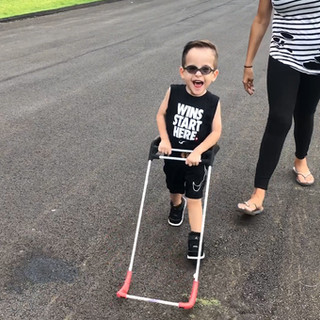
A static cane arc is built into the shape of a mobility device. Instead of requiring the child to swing a long cane back and forth, the device maintains a protective frame or arc in front of the child as it moves forward.
Examples include rectangular canes, also known as alternative mobility devices (AMDs), and Pediatric Belt Canes. These devices create a consistent area of protection because the cane frame remains positioned in front of the child and in contact with the ground. The child pushes the static arc ahead, allowing the device to detect obstacles and changes in the walking surface before the child reaches them.
For maximum safety, the device must fit the child. The width should match the child’s body width, and the length should extend far enough ahead to provide warning before the child steps into a hazard. When properly fitted and used, a static cane arc can offer protection similar to a dynamic cane arc while requiring less complex coordination.
Dynamic Cane Arc vs. Static Cane Arc: What Is the Difference?
Feature | Dynamic Cane Arc | Static Cane Arc |
How it is created | By sweeping a long cane from side to side | By the fixed shape of a rectangular cane or Pediatric Belt Cane |
What the child does | Coordinates cane movement with each step | Pushes or wears the device so it stays ahead of the body |
Skill demands | Requires rhythm, strength, timing, and consistent ground contact | Requires less coordination making it easier for young children. |
Protection | Exists only while the cane is moving correctly | Exists as long as the frame stays positioned in front and in contact with the ground |
Why Every Blind Child Needs a White Cane Arc for Safety
1. Safe Navigation and Orientation
A white cane arc helps blind children navigate their environment
safely. By keeping the cane tip on the ground, they can detect obstacles, changes in terrain, and other potential hazards. This tactile feedback is crucial for understanding their surroundings.

2. Better Awareness of Surroundings
Using a white cane arc increases a child's awareness of their environment. It helps them identify curbs, steps, and other changes in elevation, allowing them to move confidently and independently.

3. Clear Communication with Others
The white cane also signals to pedestrians, drivers, teachers, classmates, and community members that the child is blind or visually impaired. This visual cue can encourage others to provide space, reduce crowding, and respond more safely.

4. Development of Personal Space and Self-Reliance
A reliable cane arc gives children more control over their own movement. Instead of depending only on adult guidance, children can begin exploring, making choices, and understanding the space around their bodies.

5. 5. Stronger Orientation and Mobility Skills
Learning to keep a cane arc in front of the body is a foundational O&M skill. Whether a child uses a dynamic arc with a long cane or a static arc with a rectangular cane or Pediatric Belt Cane, the goal is the same: safer, more independent travel.

6. Prevention of of Falls and Injuries
The cane arc provides early warning. By detecting objects and drop-offs before the child reaches them, the arc reduces the likelihood of collisions, trips, falls, and other preventable injuries.

Choosing the Right White Cane Arc for a Child
The best mobility device depends on the child’s age, walking ability, balance, motor skills, attention, environment, and O&M goals. Some children may be ready for a long cane and a dynamic cane arc. Others may need the more consistent protection of a static cane arc while they develop the skills needed for future cane travel.
Access to an age-appropriate white cane arc should not be delayed simply because a child is young. Early mobility tools can support safer movement, independent exploration, concept development, and participation in everyday routines.
Conclusion: The Cane Arc Is the Safety Tool
A white cane arc is more than a technique. It is a vital safety tool for children with blindness or MVI/B. A dynamic cane arc protects the child when a long cane is used correctly. A static cane arc provides similar protection through the design of a rectangular cane, AMD, or Pediatric Belt Cane.
Every child who is blind or has MVI/B deserves access to a mobility tool that gives them advance warning, protects their body, and supports independent movement. With the right fit, training, and support, the white cane arc can help children move through the world with greater safety, confidence, and freedom.


Comments