top of page


Balanced, Protected, and Informed O&M for Active Daily Living
Dr. Grace Ambrose-Zaken


Fall Is Full of Places to Go
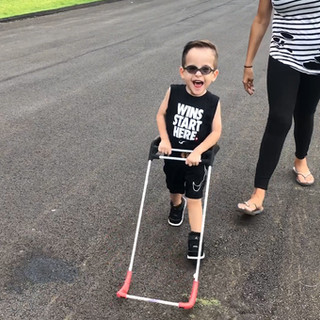
Learning self-reliant travel is more fun and rewarding with the Belt Cane. Fall gives children with a mobility visual impairment or blindness (MVI/B) so many reasons to get up and move. There are pumpkins to find, leaves to crunch, playgrounds to visit, school activities to attend, friends and family to see, and new places to discover.
Grace Ambrose-Zaken
Oct 6


The Protected Next Step: How the Belt Cane Builds Self-Reliant Walking in MVI/B Children
The Belt Cane’s rectangular frame protects the space directly in front of a blind child before the child’s body enters it. This protected next step can change mobility from hand-holding and collisions to safer, more confident independent movement.
Grace Ambrose-Zaken
Jul 31


Blind Baby Safe Mobility CEU Courses: ACVREP-Approved Training for Orientation & Mobility and Vision Professionals
A New Era in Mobility for Learners with an MVI/B the Pediatric Belt Cane, long cane instruction begins after a child demonstrates the ability to walk and grasp a cane, leaving a critical developmental window unsupported. Safe Toddles educational programming addresses this gap at every age. Our training focuses on assessment and teaching strategies for child wearing the Pediatric Belt Cane, the only mobility tool recognized as a walking solution.
Grace Ambrose-Zaken
Mar 7


Why Does a Blind Child Need a White Cane Arc for Safety, and what is it?
The white cane arc is an essential tool for anyone with a mobility visual impairment or blindness (MVI/B). Yet, children with an MVI/B struggle to even hold the long cane much less sweep it back and forth with each step. Children can push a static white cane arc in front of them. The static white cane arc is when it is built into the device.
Grace Ambrose-Zaken
Sep 9, 2025
bottom of page