top of page


Balanced, Protected, and Informed O&M for Active Daily Living
Dr. Grace Ambrose-Zaken


🚨 ALERT! The Definition of an AMD Has Changed
And if you work with blind babies and toddlers, you need to know what this means. There is something buried in the newest edition of Foundations of Orientation and Mobility that parents of blind children—and the professionals serving them—should pay attention to. Mobility tools made easy for blind kids are used in more places. The 4th edition of Foundations of Orientation and Mobility, published in 2024, is presented as a major professional reference for O&M students and prac
Grace Ambrose-Zaken
Sep 5


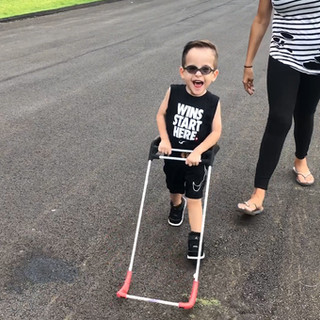
It’s Never Too Late: How the Pediatric Belt Cane Unlocks Walking Confidence for Children with an MVI/B
At approximately 12 months, the eyes of sighted children have physically developed to adult proportions. This shift allows vision to become the dominant source of balance feedback for walking. The Pediatric Belt Cane provides what the developing MVI/B body needs: enhanced tactile feedback.
Grace Ambrose-Zaken
Feb 23


Understanding Blind Walking: How Extended Touch Enables Balanced Walking
Mobility tools (Belt Cane, rectangular cane, long cane, and human guide) all share a common feature, they provide body-to-device-to-surface link. They allow the blind person to touch the ground ahead this additional sensory information helps stabilize walking in much the same way vision does. When a cane touches the ground, it sends signals to the brain about the surface and body position, acting as an extension of the sensory system.
Grace Ambrose-Zaken
Jan 28


Transforming Accessibility: How Leaders Drive Innovation for People with Disabilities
At Safe Toddles, Inc., we recognize the importance of leaders like Chris and Dave. Their $25,000 leadership gift places them among a distinguished group of individuals, foundations, and corporations who invest between $25,000 and $49,999 annually. This group plays a vital role in expanding accessibility and independence for children with a mobility visual impairment or blindness.
Beaux Jettson
Dec 17, 2025


Your Blind Child Isn’t being “Bad” — The Cane Is Too Difficult to Swing Each Step
If your blind child resists using their cane, it’s not defiance — it’s design. Many young children struggle to swing a traditional long cane safely or effectively. Learn the five signs your blind child’s cane or mobility device isn’t right and discover how the Pediatric Belt Cane can help them walk confidently, safely, and independently.
Grace Ambrose-Zaken
Nov 4, 2025


The Long Cane Needs a Revolution — And It’s Here
Long cane tips—from rollers to discs—try to solve a real problem: swinging a cane on varied terrain isn’t easy. Yet, after 150 years, the technique remains the same. It’s time for true innovation, like the wearable Belt Cane, bringing effortless, hands-free mobility to every blind traveler.
Grace Ambrose-Zaken
Oct 20, 2025
bottom of page