top of page


Balanced, Protected, and Informed O&M for Active Daily Living
Dr. Grace Ambrose-Zaken


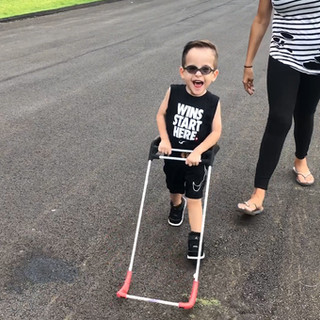
The Protected Next Step: How the Belt Cane Builds Self-Reliant Walking in MVI/B Children
The Belt Cane’s rectangular frame protects the space directly in front of a blind child before the child’s body enters it. This protected next step can change mobility from hand-holding and collisions to safer, more confident independent movement.
Grace Ambrose-Zaken
Jul 31

Preparing Your Child with MVI/B mobility for the First Day of School: A Checklist
Preparing your blind child for the first day of school starts long before the school bell rings. Discover fun summer activities that build independent mobility, confidence, and school readiness through extended touch feedback with the Pediatric Belt Cane.
Grace Ambrose-Zaken
Jul 12


What Blind Children Are Really Feeling When You Say “Take That Thing Off Her”: Why Extended Touch Feedback for Blind Children Matters
A viral video of a three-year-old girl climbing independently with a Pediatric Belt Cane sparked both praise and criticism online. But the backlash reveals a deeper societal bias: blind children have historically been denied the extended touch feedback they need for safe, confident, independent movement. This article explains why the Belt Cane is not “too much touch” — it is the equivalent of turning on the lights for a child who cannot rely on vision.
Grace Ambrose-Zaken
May 19


When Blindness Is Mistaken for “Behavior”: Why Blind Children With Intellectual Disabilities Need More Touch Feedback, Not Less
Maddox began using the Belt Cane at age 2. This short shows his progression toward independent mobility, including walking confidently through familiar environments, navigating school routines, and getting on and off the school bus—even in snowy conditions. Despite intellectual delays, he demonstrates strong spatial understanding and real-world independence through consistent tactile feedback and early mobility support.
Grace Ambrose-Zaken
May 9


Why Does a Blind Child Need a White Cane Arc for Safety, and what is it?
The white cane arc is an essential tool for anyone with a mobility visual impairment or blindness (MVI/B). Yet, children with an MVI/B struggle to even hold the long cane much less sweep it back and forth with each step. Children can push a static white cane arc in front of them. The static white cane arc is when it is built into the device.
Grace Ambrose-Zaken
Sep 9, 2025
bottom of page