top of page


Balanced, Protected, and Informed O&M for Active Daily Living
Dr. Grace Ambrose-Zaken

When does a child need a mobility device?
When deciding whether a blind child needs a mobility device, are we asking the right questions? A clearer developmental framework starts with the child's need for protection and environmental information—not motivation, cane failure, social acceptability, or other unnecessary barriers.
Grace Ambrose-Zaken
Sep 1


Understanding Mobility for Blind Children: The Importance of Active Exploration
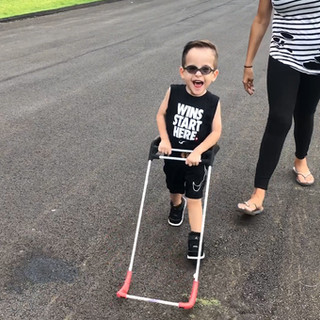
The narrative that blind toddlers are lacking sensory information needed to entice them to walk is true. But it can't be vision...they don't know what sight is. Blind toddlers know and love touch feedback, and the cane frame allows them to claim the space ahead of themselves and use tactile signals from the cane frame to move with self-reliance.
Grace Ambrose-Zaken
Aug 25


What Is the Goal of the Push Toy for MVI/B Toddlers?
Where Push Toys Fall Short
Push toys were never designed as mobility tools. And when you look at them through that lens, the limitations are obvious:
They don’t travel well (try fitting one in a car or airplane)
They don’t function in real environments (grass, gravel, uneven terrain)
They’re difficult to steer and control
They don’t fit into daily life (classrooms, tight spaces)
They offer no practical strategy for stairs
Grace Ambrose-Zaken
Mar 22


Who Is Advocating for the Quiet Blind Child?
Allow blind children to wear the Pediatric Belt Cane—a mobility solution that extends touch feedback at the moment it is needed most, during early walking.
Allow them to move independently now, not someday.
Allow them to build balance through information, not fear.
Allow them to walk safely until they are old enough to speak for themselves and advocate for a long cane.
Grace Ambrose-Zaken
Feb 1


Understanding Blind Walking: How Extended Touch Enables Balanced Walking
Mobility tools (Belt Cane, rectangular cane, long cane, and human guide) all share a common feature, they provide body-to-device-to-surface link. They allow the blind person to touch the ground ahead this additional sensory information helps stabilize walking in much the same way vision does. When a cane touches the ground, it sends signals to the brain about the surface and body position, acting as an extension of the sensory system.
Grace Ambrose-Zaken
Jan 28
bottom of page