


Who Is Advocating for the Quiet Blind Child?
Who is speaking for the quiet blind child?
Not the one crying out.
Not the one demanding attention.
But the one sitting quietly on the floor.
The one who can walk.
The one who wants to walk.
The one who waits—day after day—for a hand to hold.
That child is quiet for a reason. And the reason should disturb all of us.

The Silence Is Learned
Every day, blind children are reassured: You can walk.
And every day, they try.
But every day, walking feels just as imbalanced, unsafe, and uncertain as it did the day before. Nothing changes. No new feedback. No new information. No new sense of safety.
So they learn something devastatingly logical:
Walking doesn’t work unless someone helps me.
This isn’t fear.
It isn’t laziness.
It isn’t lack of motivation.
It’s physics.
The Impossible Standard We Expect
For centuries, we have quietly upheld a dangerous belief:
that blind children should somehow rise above the laws of balance and motion.
That they should run, play, and navigate space without vision and without extended touch feedback.
That their bodies should “figure it out” despite missing the primary sensory system that informs balance, speed, distance, and orientation.
We expect the impossible.
And then we wonder why they stop trying.
A Stark Contrast We Ignore
History tells a different story for adults.
The 21-year-old soldier who returned home blind refused to surrender to a life without safe, confident mobility. He advocated. Others listened. Innovation followed.
The long cane was developed.
It was a victory—small, but meaningful. A recognition that touch matters. That mobility requires feedback. That blindness does not mean surrendering safety.
But the war is not over.
Because no one is asking:
What about the silent blind child?
The Child No One Sees
The child who sits most of the day.
The child who loves to walk—but only if someone holds their hand.
The child who loves to play, laugh, sing, learn, and engage—but remains seated, waiting.
Waiting not because they can’t walk.
But because walking without information feels dangerous.
That child is not less capable.
That child is more vulnerable.
And yet, we offer them less support than we offer newly blinded adults.
Let’s Be Honest About Risk
A blind child is more vulnerable than a newly blinded soldier.
They cannot advocate for themselves.
They cannot demand better tools.
They cannot explain why walking feels terrifying.
Their silence is not consent.
It is a signal we have failed to hear.
Who Is Advocating?
Safe Toddles is.
We are asking sighted adults—parents, professionals, clinicians, educators—to take off their blinders and truly see what is happening.
Blind babies do not need to “try harder.”
They need access to their dominant sense: touch.
They need touch extended everywhere they go.
There Is Hope—and There Is a Way
The solution is not restraint.
Not pushing.
Not pulling.
Not endless prompting.
The solution is dignity.
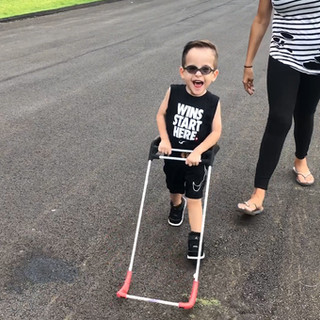
Allow blind children to wear the Pediatric Belt Cane—a mobility solution that extends touch feedback at the moment it is needed most, during early walking.
Allow them to move independently now, not someday.
Allow them to build balance through information, not fear.
Allow them to walk safely until they are old enough to speak for themselves and advocate for a long cane.
Advocate With Us
Safe Toddles is advocating for 2026 innovation in how we understand blind baby balance, mobility, and development.
The Pediatric Belt Cane is the walking solution parents of blind babies have been searching for—not because their children are broken, but because they are human.
The quiet blind child deserves a voice.
Until they can speak for themselves,
we will speak for them.


Comments