top of page


Balanced, Protected, and Informed O&M for Active Daily Living
Dr. Grace Ambrose-Zaken


Fall Is Full of Places to Go
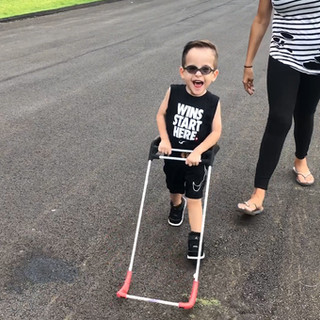
Learning self-reliant travel is more fun and rewarding with the Belt Cane. Fall gives children with a mobility visual impairment or blindness (MVI/B) so many reasons to get up and move. There are pumpkins to find, leaves to crunch, playgrounds to visit, school activities to attend, friends and family to see, and new places to discover.
Grace Ambrose-Zaken
Oct 6


Ready for the Whole School Day: Summer Practice with the Pediatric Belt Cane
Independent mobility is not learned in a single lesson. It grows through everyday experience: every playground visited, every restaurant explored, every family outing, and every walk around the neighborhood. When children with an MVI/B trust the information provided through extended touch feedback of the Belt Cane, they gain more than mobility. They gain confidence, connection, and the freedom to belong.
Grace Ambrose-Zaken
Jul 18


Pop the Bubble Wrap: Why the Pediatric Belt Cane Makes Summer More Fun for Blind Kids
Excerpt: Want blind kids to take off the bubble wrap this summer? Start with what actually helps: a Pediatric Belt Cane, movement-rich play, and a healthy respect for touch as the star of the show.
Grace Ambrose-Zaken
May 27


What Blind Children Are Really Feeling When You Say “Take That Thing Off Her”: Why Extended Touch Feedback for Blind Children Matters
A viral video of a three-year-old girl climbing independently with a Pediatric Belt Cane sparked both praise and criticism online. But the backlash reveals a deeper societal bias: blind children have historically been denied the extended touch feedback they need for safe, confident, independent movement. This article explains why the Belt Cane is not “too much touch” — it is the equivalent of turning on the lights for a child who cannot rely on vision.
Grace Ambrose-Zaken
May 19


Celebrate Mother's Day with Our Heartwarming Video and Support a Great Cause
Mother’s Day is a special time to honor the incredible role mothers play in our lives. This year, we invite you to experience a touching video that captures the essence of motherhood. The video shows mothers around the world helping their blind children with Belt Canes, simple yet powerful moments that highlights a mother's care, patience, and love.
Grace Ambrose-Zaken
May 9


Understanding Blind Walking: How Extended Touch Enables Balanced Walking
Mobility tools (Belt Cane, rectangular cane, long cane, and human guide) all share a common feature, they provide body-to-device-to-surface link. They allow the blind person to touch the ground ahead this additional sensory information helps stabilize walking in much the same way vision does. When a cane touches the ground, it sends signals to the brain about the surface and body position, acting as an extension of the sensory system.
Grace Ambrose-Zaken
Jan 28


Discover How Pediatric Belt Canes Transform Mobility
Mobility tools for children with a visual impairment are specially designed to meet their unique needs. Unlike adults, children require devices that are lightweight, easy to handle, and adaptable to their smaller frames. The pediatric mobility tool category includes various aids, but the Belt Cane has gained attention for its practical benefits.
Grace Ambrose-Zaken
Jan 8


🛝 Accessible Play Starts Here: The Pediatric Belt Cane Advantage
Playgrounds should be places of freedom, not frustration — especially for blind children. The Pediatric Belt Cane gives young blind kids the ability to explore, climb, swing, and slide with confidence by providing real-time tactile feedback about their environment. It’s not just a mobility tool — it’s the key to truly inclusive, independent play.
Grace Ambrose-Zaken
Oct 6, 2025
bottom of page