top of page


Balanced, Protected, and Informed O&M for Active Daily Living
Dr. Grace Ambrose-Zaken

Play, Games, and Sports for MVI/B Children Wearing a Pediatric Belt Cane
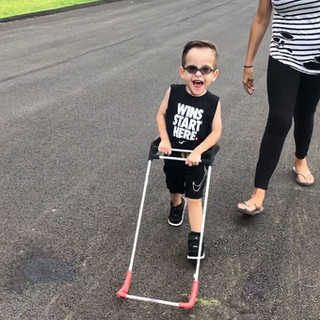
When a child with a mobility visual impairment or blindness (MVI/B) wants to run, play, join a game, and participate in sports their wearable cane becomes something they can continue to rely upon for balance, protection, and information as they use both hands to engage in the fun.
Grace Ambrose-Zaken
Nov 5

White Cane Soccer: Let the Whole Blind Child Play
Explore the Blind Baby Safe Mobility Curriculum White Cane Soccer is part of a larger approach to early mobility education: giving families practical ways to help blind children learn through fun.
The Blind Baby Safe Mobility Curriculum connects movement with motor development, language, concepts, and social participation. Ball play offers opportunities to practice skills that matter well beyond the playing area.
Grace Ambrose-Zaken
Oct 28


Fall Is Full of Places to Go
Learning self-reliant travel is more fun and rewarding with the Belt Cane. Fall gives children with a mobility visual impairment or blindness (MVI/B) so many reasons to get up and move. There are pumpkins to find, leaves to crunch, playgrounds to visit, school activities to attend, friends and family to see, and new places to discover.
Grace Ambrose-Zaken
Oct 6


Why the Cane Frame Needs to Be Obvious
The cane frame is obvious for a reason. The See My Cane Frame campaign helps sighted people understand why visible Belt Canes give blind children clearer next-step confidence, protected personal space, and pride in moving independently.
Grace Ambrose-Zaken
Aug 11


Ready for the Whole School Day: Summer Practice with the Pediatric Belt Cane
Independent mobility is not learned in a single lesson. It grows through everyday experience: every playground visited, every restaurant explored, every family outing, and every walk around the neighborhood. When children with an MVI/B trust the information provided through extended touch feedback of the Belt Cane, they gain more than mobility. They gain confidence, connection, and the freedom to belong.
Grace Ambrose-Zaken
Jul 18


Pop the Bubble Wrap: Why the Pediatric Belt Cane Makes Summer More Fun for Blind Kids
Excerpt: Want blind kids to take off the bubble wrap this summer? Start with what actually helps: a Pediatric Belt Cane, movement-rich play, and a healthy respect for touch as the star of the show.
Grace Ambrose-Zaken
May 27


🛝 Accessible Play Starts Here: The Pediatric Belt Cane Advantage
Playgrounds should be places of freedom, not frustration — especially for blind children. The Pediatric Belt Cane gives young blind kids the ability to explore, climb, swing, and slide with confidence by providing real-time tactile feedback about their environment. It’s not just a mobility tool — it’s the key to truly inclusive, independent play.
Grace Ambrose-Zaken
Oct 6, 2025


🧭 It’s Not Orientation, It’s Mobility: A Thought Experiment for Parents of Blind Children
Most people assume blind children don’t know where they are — but the real challenge isn’t orientation, it’s mobility. In this eye-opening thought experiment, you’ll discover how blind kids can confidently know their space, yet still need tools like the white cane to move safely. Try it yourself: close your eyes, navigate your home, and gain a deeper understanding of what your child truly experiences.
Grace Ambrose-Zaken
Sep 29, 2025


Empowering Independence: Chores for Children with Visual Impairments
Now that your blind child is moving confidently with the Pediatric Belt Cane, it’s the perfect time to start building independence at home. Learn how to teach age-appropriate chores through direct instruction, tactile routines, and daily practice—empowering your child to develop essential life skills one step at a time.
Grace Ambrose-Zaken
Sep 22, 2025
bottom of page