


Ready for the Whole School Day: Summer Practice with the Pediatric Belt Cane
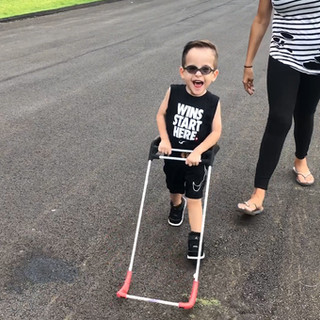
For many families, school success is measured by report cards, reading levels, and completed assignments. But when children talk about school, they often remember something different: playing tag at recess, walking to lunch with friends, running across the playground, going on field trips, joining clubs, and laughing in the hallway between classes.

Those memorable school experiences do not happen while children are sitting at a desk. They happen while children are moving. For children with a mobility visual impairment or blindness (MVI/B), movement is just as much the doorway to friendship, confidence, independence, and belonging as for sighted children.
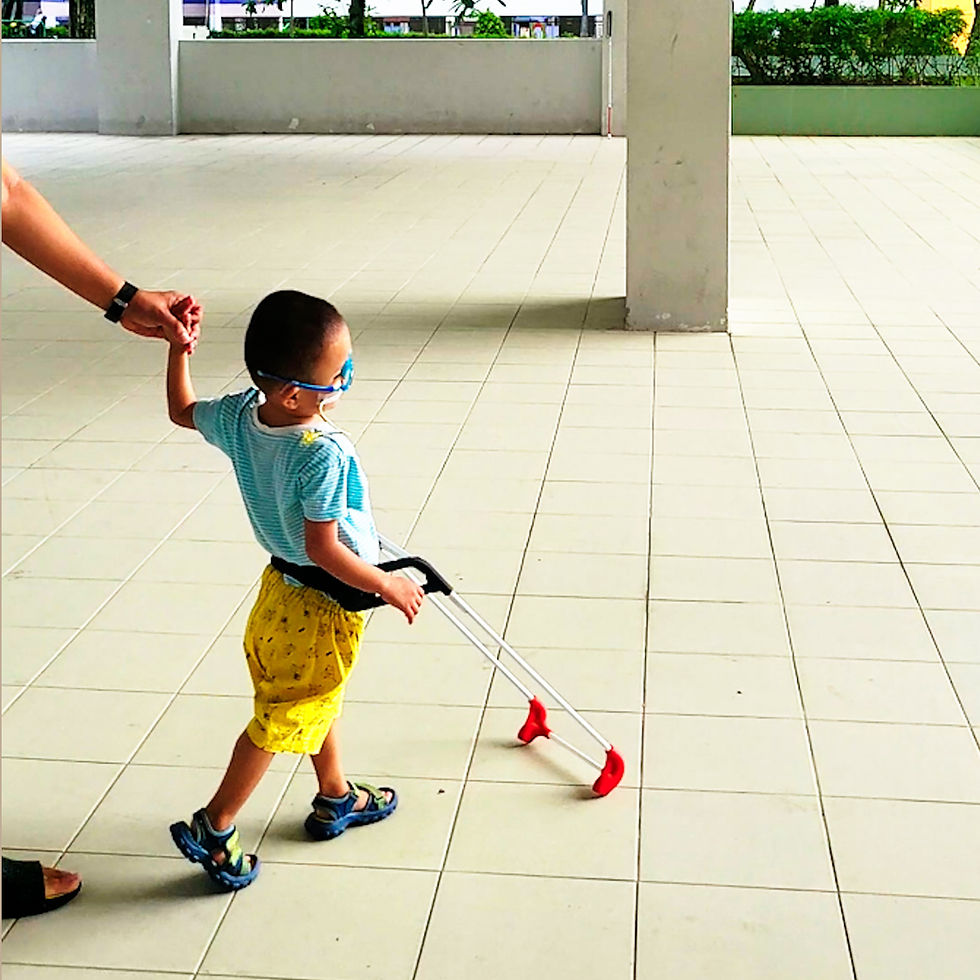
That is why summer is the right time for parents to get a Pediatric Belt Cane and begin practicing the everyday movement skills that make the school year easier. The Pediatric Belt Cane provides continuous extended touch feedback ahead of a child with MVI/B’s body, helping the child detect obstacles in time to react, maintain orientation, and move with greater confidence.
When children with an MVI/B can move confidently through school, they are more likely to join games, initiate conversations, explore new spaces, and participate in the full life of the school day.
Every Transition Is a Learning Opportunity
School days are filled with movement. Children travel from the classroom to specials, from lunch to recess, from the bus to school, from the library back to class, and from school back home. These transitions may happen dozens of times each day.
For a child with an MVI/B who relies on a guide, transitions can become stressful or passive. When children with an MVI/B regularly wear a Pediatric Belt Cane, they begin to trust the tactile information they receive. Over time, moving from place to place becomes smoother, calmer, and less dependent on adult assistance.
Summer practice
Create transition games at home. Practice moving from the bedroom to the kitchen, the front door to the mailbox, the driveway to the garage, or the backyard to the swing set. Instead of saying, “Follow me,” encourage your child to lead while you follow nearby. That one small shift helps your child practice independence before the school year begins.

Recess Is About More Than Play
Recess is often where friendships begin. Children run toward a favorite game, chase classmates, climb, explore, and invent new adventures. A child who hesitates to move may miss opportunities to join in.
Extended touch feedback can help children with an MVI/B approach playground equipment, detect benches and structures first with the cane frame leading the way, clearing the path for their little legs and delicate fingers. The constant presence of the cane frame reminds others of their need for a clear path to move between groups of children, explore new areas, and return to the classroom with greater confidence.
Summer practice
Visit several different playgrounds with the goal of identifying how to get from the merry-go-round to the swings what is the same, and talk about what is different from our local playground. Each playground gives your MVI/B child opportunities to learn short routes (bottom of slide to ladder), balance on wobbly bridges, walk across mulch, grass, and pavement to find the family blanket and practice joining other children in play. Encourage your child with an MVI/B to invite another child to play or ask, “Can I join your game?” These moments build both social confidence and self-advocacy.
Physical Education Builds Confidence
Physical education is one of the most active parts of the school day. Instead of sitting on the sidelines, blind children should have opportunities to participate safely and meaningfully alongside their classmates.
Summer is a good time to practice walking quickly, changing direction, following verbal directions, navigating around cones or equipment, and maintaining balance while moving. Children with an MVI/B who are comfortable moving in dynamic environments are better prepared to enjoy PE when school begins.
The Lunchroom Is One of the Best Classrooms
School cafeterias combine almost every mobility challenge: crowds, noise, moving chairs, narrow aisles, food trays, and the task of finding friends. These challenges also make the lunchroom one of the best places to build independence.
Summer practice
Visit a food court or busy restaurant. Practice carrying a tray, walking between tables, choosing the widest pathway, listening for familiar voices, asking whether there is a wider aisle to the table, locating an empty chair, sitting independently, and clearing the tray afterward.
The Belt Cane provides continuous tactile feedback as children move through changing environments, helping them avoid obstacles and judge comfortable distances from people and furniture.

Field Trips Become Adventures
Field trips introduce unfamiliar environments such as museums, zoos, nature centers, historical sites, farms, theaters, and community spaces. These trips are exciting learning opportunities, but they also require flexible mobility and orientation skills.
Before school starts, visit similar places as a family. Encourage your child to identify landmarks, listen for environmental clues, and ask questions. Try different methods to see what’s best for your child to stay with the group while traveling as independently as possible. Is it a tether, constant verbal chatter or the directive to “stay on the path”. These experiences prepare children with an MVI/B to participate more fully when their classes go on field trips.
After-School Activities Build Independence
Some of the most meaningful friendships develop after the final school bell rings. Whether your child joins Scouts, a music program, adaptive sports, a community club, or another activity, independent mobility supports participation.
The same skills practiced during the school day—navigating new buildings, locating meeting rooms, greeting peers, and maintaining personal space—carry over into after-school life. Summer is an ideal time to explore local opportunities and build confidence before the school year begins.
Orientation Is More Than Finding Your Way
Independent mobility also helps children understand where they are in relation to the people and places around them. As you explore your community this summer, help your child with an MVI/B notice landmarks and clues that support orientation.
Landmarks might include the drinking fountain outside the gym, a large tree near the playground, the cafeteria entrance, or the school office. Clues might include the sound of children playing, the smell of lunch being served, the echo in a long hallway, or music coming from the auditorium.
Encourage your child with an MVI/B to talk about these features. Naming landmarks and clues strengthens orientation and helps build the mental maps that support confident travel.

Confidence Grows One Adventure at a Time
Independent mobility is not learned in a single lesson. It grows through everyday experience: every playground visited, every restaurant explored, every family outing, and every walk around the neighborhood.
Each adventure teaches children that they can move safely, solve problems, and participate fully. By the time the first school bell rings, they are ready not only to travel from one classroom to another, but also to enjoy the friendships, activities, and experiences that make school meaningful.
When children with an MVI/B trust the information provided through extended touch feedback, they gain more than mobility. They gain confidence, connection, and the freedom to belong.
Continue Learning
Explore the Blind Baby Safe Mobility Curriculum and review modules such as Teaching Motor Skills While Wearing the Pediatric Belt Cane, Introducing the Pediatric Belt Cane, and Orientation and Mobility Foundations for Families.
Families can also look for videos of children navigating playgrounds with the Pediatric Belt Cane, moving through cafeteria or community dining settings, exploring field trip environments, and walking confidently with friends in busy spaces.
Link to Blind Baby Safe Mobility Curriculum funded by the Nicolas B. Ottaway Foundation and the Delta Gamma Foundation
Belt Cane Back to School Guide: Five-part Series
Links
Article 4: Ready for the Whole School Day: Summer Practice with the Pediatric Belt Cane (current article)
Article 5: Writing Better IEP Mobility Goals for Independent School Travel

Comments