top of page


Balanced, Protected, and Informed O&M for Active Daily Living
Dr. Grace Ambrose-Zaken


Understanding Mobility for Blind Children: The Importance of Active Exploration
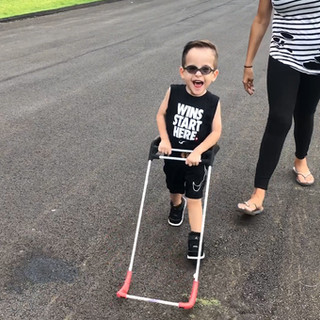
The narrative that blind toddlers are lacking sensory information needed to entice them to walk is true. But it can't be vision...they don't know what sight is. Blind toddlers know and love touch feedback, and the cane frame allows them to claim the space ahead of themselves and use tactile signals from the cane frame to move with self-reliance.
Grace Ambrose-Zaken
Aug 25


Building Walkers: From Wobbly Steps to Confident Movement
Start early. Stay consistent. Keep extended touch feedback part of daily life. To learn more and obtain ACVREP CEUs go to our curriculum and courses: https://safetoddles.podia.com/
Grace Ambrose-Zaken
Apr 25


Building Walkers: From Assisted Steps to Intentional Forward Movement
Your child can move forward wearing the Belt Cane, but only when something (your hand, a wall, furniture) is doing part of the work. Now the goal is simple increase the number of steps and decrease support as the Belt Cane protects, informs, and balances out their movement:
Grace Ambrose-Zaken
Apr 25


Building Walkers: A Daily Mobility Framework for Young Blind Children Using the Belt Cane
This is a walking plan to help parents and professionals build early walking skills through providing children with a mobility visual impairment or blindness daily recommended hours of meaningful movement every day paired with extended touch feedback.
Grace Ambrose-Zaken
Apr 24


Walking Has a Purpose: From First Steps to Meaningful Movement
Walking starts as a goal—then becomes a gateway. What once felt like a distant milestone becomes routine—and that’s exactly the point. Because once a child walks well, the world opens.
Grace Ambrose-Zaken
Mar 23
bottom of page