


Building Walkers: From Wobbly Steps to Confident Movement
Updated: May 9
Early Independent Walking: 15 Months and Above
The Reality Check
Your child may be walking, but they might still show signs of:
Unstable balance
Cautious steps unless holding a hand
Inconsistent willingness to walk
This is where the real transition to walking well begins. It’s time to add more practice. More routes to learn, greater expectations to participate in social exchanges, and more rules to teach them about when to hold a hand, slow down, or stop.

Daily Target
5–6 Hours of Total Walking + Movement Play
Yes, that sounds like a lot. But lots of movement is typical for this age group. All movement is enriched through extended touch feedback. All play includes age-appropriate social distance. All daily life can be enhanced with the benefit of extended touch.
Primary Goals
Build balance through following daily routines.
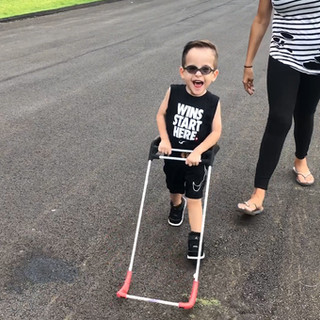
Expand movement range by learning to lift the frame before stepping up.
Continue reinforcing simple routes to landmarks.
Strengthen independence in moving through familiar locations without holding on.

What Changes Now
1. Reduce Hand Holding
Only step in when necessary. Too much support can delay balance development.
2. Increase Movement Through Play and Social Exchanges
Here are some examples:
Walking to find toys to play with.
Playing games that involve moving from one part of the room to another.
Moving between rooms to chase and carry items.
Walking to and from the car.
Navigating in stores and bringing items to the sales counter.

3. Continue to Expand Meaningful Routes
Keep routes simple and consistent:
Bedroom door → Front room coat closet
Kitchen counter → Coffee table
Front door → Parked car
Back door → Outside swing
Reinforce that each meaningful destination has a predictable route with landmarks and clues along the way. When the cane contacts something, help your child use that information to orient and plan their route. Adult verbal and physical prompts are also helpful. Pair the same word with the expected action or orientation meaning.
Belt Cane = Constant Companion
Now, the Belt Cane expands its role to be dynamic:
Obstacle detection
Boundary awareness
Confidence builder

This is where you start seeing:
Meaningful collisions, the cane frame communicating space, time, and distance.
What Progress Looks Like
Longer independent walking and exploration.
Greater confidence.
More curiosity.
Beginning of directional movement.

The Importance of Consistency
Start early and stay consistent. Keep extended touch feedback a part of daily life. This approach not only aids in mobility but also builds confidence.
To learn more and obtain ACVREP CEUs, visit our curriculum and courses: https://safetoddles.podia.com/

Our Blind Baby Safe Mobility curriculum is funded by generous donations from the Nicholas B. Ottaway Foundation, the Delta Gamma Foundation, and people like you.


Comments