


Building Walkers: From Assisted Steps to Intentional Forward Movement
Updated: May 9
Methods for a child with a mobility visual impairment or blindness (MVI/B) above the age of 11 months and able to walk with handheld assistance
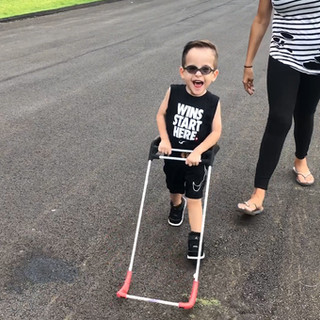
Children with a mobility visual impairment or blindness (MVI/B) can transition from 1-2 hour daily walking wearing the Belt Cane to 3 to 4 hours daily once they demonstrate the ability to take multiple steps when holding one or two hands.
It is essential to increase amount of physical activity to develop walking strength, agility, and vital orientation and mobility (O&M) concepts. The Belt Cane provides them polygon of social distance from people and provides protection, balance and information provided by the Belt Cane.
It is important to be intentional in achieving daily hours of movement with a child with an MVI/B, as they benefit from hands on practice to fill in the gaps caused by blindness.

The Shift That Matters
Your MVI/B child can move forward wearing the Belt Cane, but only when something (your hand, a wall, furniture) is doing part of the work.
Now the goal is simple increase the number of steps and decrease support as the Belt Cane protects, informs, and balances out their movement:
Turn “can step” into “chooses to move.”
Daily Target
3–4 hours minimum of daily walking activities
This is:
holding hands while moving through the house
walking during daily routines
choosing walking instead of carrying at home, the grocery, and the park.
What You’re Building
Forward momentum
motor muscle and memory
Rhythm and pacing
Early route familiarity
Confidence moving through space

How to Structure the Day
1. Replace Carrying With Walking
When your child can take steps with support, default to:
holding one or two hands- keep track of the time
slowly walking short distances instead of carrying
playing a game that includes standing and moving (chase, throw and go get it, lets go find daddy, doggie, brother...)
This is will be a slower way to get through the room.
Children with an MVI/B learn better with a slower pace at the start of every new skill. Keep track of new motor skills and watch how they transform into useful motor actions overtime. They will become faster and more skilled with these hours of practice opportunities now possible because of the Belt Cane and the parents commitment to their child's physical and emotional well being.

2. Identify the “Micro Routes” used every day in your home and elsewhere.
Teach these routes and expect the child to gain autonomy over parts of the route traveled more frequently and need help for less familiar or more complicated (stairs, opening doors) parts of the route.
Same paths, repeated to specific, preferred, and meaningful locations:
couch → kitchen refrigerator
bedroom door → bathroom door
play area couch → toy shelf
kitchen sink→ my chair
Repetition builds mental mapping.
3. Belt Cane During Movement Creates Willingness to Move
Now it becomes active.
The child begins to:
detect objects before hitting them
anticipate space
adjust movement
This is the beginning of true walking.

4. Let Them Initiate (Even If Slow)
Don’t rush every step.
Pause and allow:
weight shifting
hesitation
self-correction
What Progress Looks Like
Takes more steps before stopping
Less leaning on support
Begins to move toward familiar places
Shows excitement when upright
Start early. Stay consistent. Keep extended touch feedback part of life.
To learn more about integrating the Belt Cane into an MVI/B child's daily physical activities and obtain ACVREP CEUs go to our curriculum and courses: https://safetoddles.podia.com/
The Blind Baby Safe Mobility curriculum was funded by generous donations Nicholas B. Ottaway Foundation, the Delta Gamma Foundation, and people like you.


Comments