


You’re Supposed to Be Independent: What We Ask of Children Born Blind.
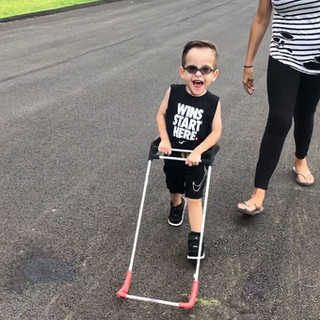

You’re supposed to be independent. That’s what everyone says they want for children born blind.
Be confident. Be curious. Go explore.
But when someone offers you a mobility tool, suddenly there are questions about whether you’re ready for it.
You’re old enough to walk into a table. But somehow too young to have a way to find it before your face does.
You’re supposed to want to move. But you’re supposed to accept that moving means bumping into things. And if you hesitate, if you reach for a hand, if you decide you would rather stay where you are, now we need to work on your motivation.
Your motivation.
As though wanting to know where you’re putting your foot is an unreasonable condition for taking a step.
You’re supposed to let go. Trust yourself. Find your balance. But the information other children use to prepare for what’s ahead? You’re expected to manage without it. And when you struggle, someone writes down what you haven’t learned yet.
You’re supposed to love your mobility tool. Be proud of it. Learn to use it.
But leave it outside the classroom. Put it away on the playground. Take it off for the game.
Then join in.
Keep up.
Why are you standing over there by yourself?
You’re supposed to learn your home so well that you don’t need a tool there. Memorize every doorway, every chair, every turn. And when somebody moves the furniture or leaves a bag in your path, you’re supposed to take the collision in stride.
It’s your own home, after all. You should know your way around.
Apparently knowing where the sofa usually lives means knowing where everyone put their shoes.
And everyone is so proud of how brave you are.
You fall, and you’re brave. You get up, and you’re resilient. You walk across a room without knowing what’s in your path, and you’re inspiring.
But could someone please help make the next trip across that room less frightening?
You’re supposed to ask for what you need. That’s self-advocacy.
But when your family asks early, they’re anxious. When they ask again, they’re demanding. When they say you could do more with reliable information about the path ahead, they need to be realistic.
Wait until you’re older. Wait until you’re ready. Wait until the evaluation. Wait until the meeting.
Meanwhile, childhood keeps happening.
The other children are running toward something funny. There’s a game starting. Your sister is already halfway to the swings.
You wanted to go, too.
And I am tired of watching children’s hesitation become evidence against them. Tired of hearing about confidence as though adults can simply ask a child to produce it. Tired of celebrating the bruises they endure without asking which ones we could have prevented.
Give them a way to find the obstacle before the collision. Give them room to practice, to choose, to make mistakes with support. Let their mobility tools belong wherever their childhood happens.
Then listen when they tell us where they want to go.
They have places to be.

Comments