


Why Are We Celebrating Each Step after the age of 2? Rethinking Potential of Blind Toddlers
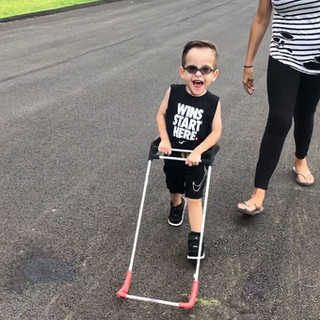
Between 12 and 14 months, when a blind baby takes a first step, we celebrate. We should. But if we are still celebrating one or a few independent steps months later, we should ask why independent movement has been so difficult, and whether we have provided the information blind children need to develop mobility.
A blind preschooler takes a few independent steps. Everyone cheers. The parents are thrilled. The professionals celebrate the milestone. The video is shared because it is such a wonderful accomplishment.
And it is.
But I want to ask a difficult question: Why have we become so accustomed to expecting so little independent mobility from blind children that just a few steps can seem extraordinary?
Imagine applying the same expectations to a sighted baby. Imagine celebrating one independent step at an age when other children are running across rooms, chasing toys, approaching family members, and exploring their homes. We would immediately wonder what was preventing that child from moving.
Yet when a blind baby struggles to stand, walk, explore, and navigate, we rightly attribute the difficulty to blindness itself, while wrongly assuming that's the best they can achieve for now.
We celebrate each small achievement without adequately examining whether the child has been unfairly limited in their developmental potential due to their lack of access to the information needed to develop self-reliant mobility.
Perhaps it is time to reconsider what we expect of blind babies.
Two feet on the ground are not enough
When a sighted baby begins to stand and walk, vision provides an enormous amount of information about the environment. The baby can see where the furniture is, where people are sitting, where toys are located, and what lies ahead. Visual information helps the child anticipate what is coming, plan movement, adjust balance, and decide where to go.
MVI/B children without a mobility tool leading the way are connected only by what they are in contact with ....often just their two feet touching the ground, just like a sighted baby. But those two feet do not provide visual information about what is ahead.
The feet and legs provide MVI/B babies the physical ability to stand, take a step, and walk. What is missing is extended touch feedback to access to the environmental information and help them organize, anticipate, and protect their movement.
Without a predictable way to detect obstacles and changes in the walking surface, movement becomes predominantly reactive. MVI/B children unprotected by a mobility tool have no way to prevent stumbling into furniture, losing balance, encountering unexpected obstacles, or relying on an adult to provide physical protection, a hand to hold.
This is not simply a question of whether the child with an MVI/B has learned to walk. It is a question of whether the child has the information needed to self-reliantly move through the environment.
Physical ability to move and self-reliant moving using the information needed to find a clear path are not the same thing.
We have normalized a celebration awkward gait and slow pace without questioning their causes
For generations, blindness has been associated with poor walking development. Professionals and families have learned to expect that blind children walk later, explore without protective devices, and require assistance navigating to specific destinations.
These experiences are real. But their frequency should prompt us to investigate their causes, not simply accept them as inevitable consequences of blindness.
A blind baby who cannot see an obstacle has no visual warning that it is there.
A baby who cannot locate a person across the room visually may have difficulty knowing where to move.
A toddler who cannot anticipate the next change in the walking surface may hesitate, stumble, or wait for an adult.
We cannot expect an MVI/B baby to develop the same movement experiences as a sighted baby while providing only a fraction of the environmental information available to that sighted baby.
And yet, we have often treated the resulting differences in development as something the child must overcome through experience, practice, and perseverance.
What if the problem is not simply that the blind child needs more practice?
What if the child with an MVI/B needs better access to information during that practice?
Protection is not the same as mobility development
Parents of blind babies understandably want to protect their children. Yet, when their MVI/B child stumbles repeatedly, reaches an obstacle unexpectedly, or loses balance, they are taught - let them...
For centuries we said
Let them...
let them fall
let them run into the wall
let them stumble down the hall
Let them learn how difficult it is not to see, as that shapes the best they can be.
NOW we say
It is wrong to watch a blind child fall, run into a wall, stumble down a hall. Instead, let them know how easy it can be to extend their touch and feel ahead, let them learn the truth about the soundness of their chosen path.
and stop at the drop,
run away from the rules, chase
their development beyond their potential, as seeing adults now insist there be belt canes for blind kids’ every adventure.
A parent may hold the MVI/B child's hand, guide their child's body, hold the back of a shirt or hood, or physically position the child with an MVI/B to prevent a fall.
These actions are loving and protective. But they cannot provide the same developmental experience as a child independently receiving information about the environment and using it to make movement decisions.
A child needs opportunities to initiate movement, encounter the environment, make decisions, adjust, and try again.
Protection from injury matters. So does access to the information that makes independent movement possible.
We should not have to choose between the two.

Why do we wait for blind babies to get older?
One of the most deeply ingrained assumptions in traditional orientation and mobility practice is that MVI/B children will begin using a long cane when they are developmentally ready.
But mobility development does not begin when a child is ready to use an adult mobility tool.
It begins when babies start moving through their environments.
A sighted baby does not wait until preschool to receive environmental information. Vision provides that information from the earliest stages of movement.
Why should a blind baby have to wait?
The long cane is an essential mobility tool. But it was not designed to address every developmental need of an infant or toddler. Young children need mobility tools that accommodate their bodies, movement patterns, and developmental stages.
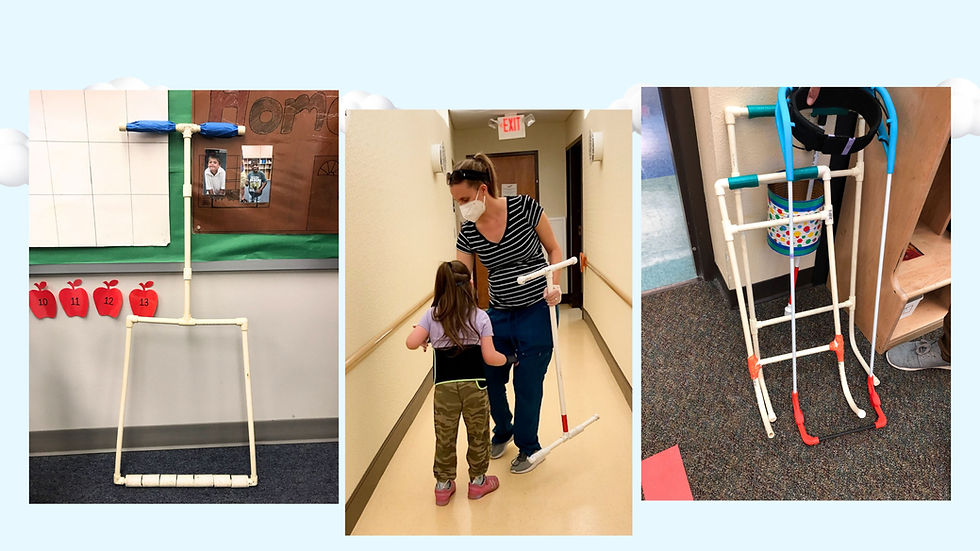
The Pediatric Belt Cane was developed to address this missing opportunity. Its wearable design positions a protective frame ahead of the child, providing anticipatory touch information about obstacles and changes in the walking path.
The child can use that information while standing, walking, and exploring, rather than having to wait until traditional long-cane skills are established.
It is not a replacement for the long cane. It is an additional developmental mobility tool.
Blind children do not outgrow their need for mobility information. They grow into new mobility needs.
What happens when we provide access to information?
At Safe Toddles, we have spent years developing, studying, and observing the use of the Pediatric Belt Cane with young children who are blind or have significant visual impairments.
We have seen children who initially require substantial physical assistance begin moving with greater control. We have observed children encounter obstacles, stop, make decisions, and choose a new direction. We have seen children participate in play, navigate familiar environments, and engage with their surroundings in ways their families had not previously experienced.
These experiences matter because they challenge the assumption that limited mobility is simply what we should expect from young blind children.
Our research and clinical observations are helping us investigate the relationship between access to environmental information and early mobility development.
Every child is different. Some children have additional motor or developmental disabilities that affect mobility, and a mobility tool does not eliminate those challenges. But we should not overlook the modifiable barrier created when a child cannot access information about the environment.
We need to stop assuming that delayed mobility is inevitable before examining whether we have provided the child with the tools and opportunities needed to develop it.
Let's celebrate the child — and raise our expectations
No one ever wants to diminish the joy parents feel watching a blind baby taking a first step. Every accomplishment deserves recognition. Parents deserve to celebrate their children's achievements, and children deserve encouragement and support.
But celebrating a child's achievement should not prevent us from questioning the circumstances that are making that achievement so difficult and also dangerous for the baby who cannot see the clear path ahead.
We should celebrate the first step by making it and the next hundred steps fit for the blind experience of navigating the world - with extended touch feedback for balance, protection, and information.
We should celebrate a child learning to walk and as adults ensure that child has access to the information needed to explore with self-confidence that only comes through the protection of the belt-secured cane frame.
We should celebrate independence while creating opportunities for more of it.
The question is not whether blind children can learn to move. They can, and they do. The question is whether we are providing the information, protection, information only obtainable through mobility tools. Are we providing them the tools to access opportunities they need to develop as fully and self-reliantly as possible.
A blind baby should not have to prove an extraordinary ability to move before we provide the tools to help that baby move.
We should start by recognizing that mobility development begins in infancy, and that access to environmental information is not an optional benefit. It is fundamental to learning to move through the world.
Let's stop measuring our expectations against an historically-bad standard of care for babies. Babies should not be purposefully, knowingly exposed to certain harm when walking without appropriate mobility tools.
Let's start measuring our responsibility by what becomes possible when we provide them with the essential tools and skills then need to be self-reliant.
Two feet on the ground are not enough. Every baby deserves access to the information needed to move.
Safe Toddles is dedicated to advancing safe, self-reliant mobility for children with blindness or mobility visual impairment through innovation, research, education, and advocacy. Learn more about the Pediatric Belt Cane and the Blind Baby Safe Mobility Curriculum at Safe Toddles.
Comments