top of page


Balanced, Protected, and Informed O&M for Active Daily Living
Dr. Grace Ambrose-Zaken


Stop Underestimating Blind Kids
Touch is the sense that blind children use to learn about their world. Blindness/mobility visual impairment accesses same information through touch. And when we don't extend their touch, we risk underestimating what they can truly do.
Grace Ambrose-Zaken
Sep 24


12 New York Children Can Receive a Pediatric Belt Cane and Training
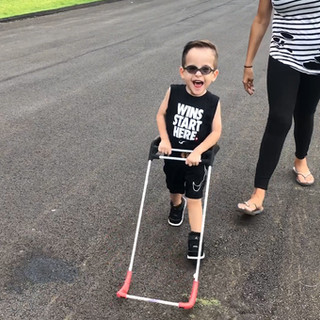
The grant award will help Safe Toddles place mobility tools directly into the hands of children aged 10 months and older. It will also support training so each recipient has help learning how the Belt Cane fits into daily movement, exploration, and safe travel.
Beaux Jettson
Sep 9


The True Cost of Waiting: What Happens When a Blind Baby Has No Mobility Tool?
The first article in “The Cost of Waiting,” a series examining what happens when we fail to invest in appropriate mobility technology for young children with a mobility visual impairment or blindness.
Grace Ambrose-Zaken
Sep 3


Why the Cane Frame Needs to Be Obvious
The cane frame is obvious for a reason. The See My Cane Frame campaign helps sighted people understand why visible Belt Canes give blind children clearer next-step confidence, protected personal space, and pride in moving independently.
Grace Ambrose-Zaken
Aug 11


Ready for the Whole School Day: Summer Practice with the Pediatric Belt Cane
Independent mobility is not learned in a single lesson. It grows through everyday experience: every playground visited, every restaurant explored, every family outing, and every walk around the neighborhood. When children with an MVI/B trust the information provided through extended touch feedback of the Belt Cane, they gain more than mobility. They gain confidence, connection, and the freedom to belong.
Grace Ambrose-Zaken
Jul 18

Preparing Your Child with an MVI/B to Navigate School with Confidence
Extended touch feedback gives blind children the confidence to navigate school independently. Learn simple summer activities that prepare your child to wear a Pediatric Belt Cane throughout the school day.
Grace Ambrose-Zaken
Jul 13

Preparing Your Child with MVI/B mobility for the First Day of School: A Checklist
Preparing your blind child for the first day of school starts long before the school bell rings. Discover fun summer activities that build independent mobility, confidence, and school readiness through extended touch feedback with the Pediatric Belt Cane.
Grace Ambrose-Zaken
Jul 12


Is Your Blind Child Ready for School? What to Practice First
Is your blind child ready for school? Discover the self-advocacy, mobility, and motor skills children should practice before the first day of school to build confidence, independence, and successful participation in the classroom.
Grace Ambrose-Zaken
Jul 11


Why Walking Success in Blind Children Should Be Boring
Walking is one of the most celebrated milestones of childhood—and one of the first achievements we immediately take for granted. For blind children, however, independent walking has historically been delayed and often attributed to blindness itself. What happens when young children with blindness gain access to extended touch feedback that provides information about the world ahead of them? The answer may be surprisingly ordinary: walking becomes effortless, natural, and almo
Grace Ambrose-Zaken
Jun 2


Empowering Exploration: The Role of the Pediatric Belt Cane in Summer Adventures for Children with an MVI/B
At the heart of mobility development is the idea that children with an MVI/B learn best by living mobility.
Grace Ambrose-Zaken
May 20


Discover Exciting Activities for Children with Visual Impairments in the Safe Toddles Summer Blog Series 2026
Summer is a perfect time for children to explore, play, and learn through new experiences. For children with visual impairments or blindness who are now mobile using the Pediatric Belt Cane, finding engaging and accessible activities can be a challenge. The Safe Toddles Summer Blog Series 2026 is designed to fill this gap by offering weekly posts filled with fun activities, games, and challenges tailored specifically for children with visual, cognitive and motor impairments
Grace Ambrose-Zaken
May 20


What Blind Children Are Really Feeling When You Say “Take That Thing Off Her”: Why Extended Touch Feedback for Blind Children Matters
A viral video of a three-year-old girl climbing independently with a Pediatric Belt Cane sparked both praise and criticism online. But the backlash reveals a deeper societal bias: blind children have historically been denied the extended touch feedback they need for safe, confident, independent movement. This article explains why the Belt Cane is not “too much touch” — it is the equivalent of turning on the lights for a child who cannot rely on vision.
Grace Ambrose-Zaken
May 19


When Blindness Is Mistaken for “Behavior”: Why Blind Children With Intellectual Disabilities Need More Touch Feedback, Not Less
Maddox began using the Belt Cane at age 2. This short shows his progression toward independent mobility, including walking confidently through familiar environments, navigating school routines, and getting on and off the school bus—even in snowy conditions. Despite intellectual delays, he demonstrates strong spatial understanding and real-world independence through consistent tactile feedback and early mobility support.
Grace Ambrose-Zaken
May 9
bottom of page