top of page


Balanced, Protected, and Informed O&M for Active Daily Living
Dr. Grace Ambrose-Zaken


Stop Underestimating Blind Kids
Touch is the sense that blind children use to learn about their world. Blindness/mobility visual impairment accesses same information through touch. And when we don't extend their touch, we risk underestimating what they can truly do.
Grace Ambrose-Zaken
Sep 24

When does a child need a mobility device?
When deciding whether a blind child needs a mobility device, are we asking the right questions? A clearer developmental framework starts with the child's need for protection and environmental information—not motivation, cane failure, social acceptability, or other unnecessary barriers.
Grace Ambrose-Zaken
Sep 1


Why the Cane Frame Needs to Be Obvious
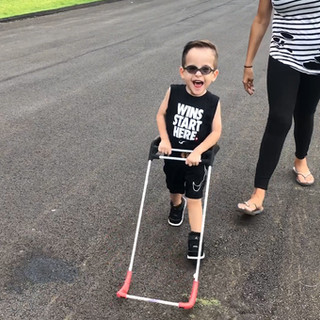
The cane frame is obvious for a reason. The See My Cane Frame campaign helps sighted people understand why visible Belt Canes give blind children clearer next-step confidence, protected personal space, and pride in moving independently.
Grace Ambrose-Zaken
Aug 11


Personal Space for Blind Toddlers: The Independence We Rarely Talk About
Summer gives children endless chances to practice social skills at playgrounds, splash pads, family gatherings, camps, and neighborhood playdates. One of the earliest social skills children learn in these moments is personal space: how close to stand, when to move closer, and when to step back. Personal space through mobility tools for social engagement is rarely discussed but incredibly important part of participating alongside your peers, not physically touching—alongside.
Grace Ambrose-Zaken
Jun 16


Every Blind Child Deserves Independence
Every child deserves the freedom to explore. Read Wesley's inspiring story and discover how mobility support helped a blind toddler move toward people, play, and independence.
Grace Ambrose-Zaken
Jun 6


Pop the Bubble Wrap: Why the Pediatric Belt Cane Makes Summer More Fun for Blind Kids
Excerpt: Want blind kids to take off the bubble wrap this summer? Start with what actually helps: a Pediatric Belt Cane, movement-rich play, and a healthy respect for touch as the star of the show.
Grace Ambrose-Zaken
May 27


Discover Exciting Activities for Children with Visual Impairments in the Safe Toddles Summer Blog Series 2026
Summer is a perfect time for children to explore, play, and learn through new experiences. For children with visual impairments or blindness who are now mobile using the Pediatric Belt Cane, finding engaging and accessible activities can be a challenge. The Safe Toddles Summer Blog Series 2026 is designed to fill this gap by offering weekly posts filled with fun activities, games, and challenges tailored specifically for children with visual, cognitive and motor impairments
Grace Ambrose-Zaken
May 20


Examining the Lesson: Mobility Tools and Route Learning
If a child can follow a sound, we might say the lesson worked. But if the child cannot identify where they are, where they’re going, or when they’ve arrived—then independence is still out of reach.
Mobility tools like the Belt Cane don’t just help children walk. They help children understand space, build routes, and move with purpose.
Grace Ambrose-Zaken
Apr 18


The Hidden Harm of Sitting: Even More Concerning in Children with Blindness
Sitting has quietly become the default position of childhood. In classrooms, therapy sessions, and even at home, young children are often expected to sit—calmly, safely, and for long stretches of time. For sighted children, this trend is already raising concerns about physical health, attention, and development. But for children with a mobility visual impairment or blindness (MVI/B), the consequences run deeper—and seem often overlooked.
Grace Ambrose-Zaken
Apr 8

From Tears to Triumph: Marlowe's Journey to Independence with the Belt Cane
We’re thrilled to share our newest YouTube video, “From Tears to Triumph: Marlowe’s Journey to Independence with the Belt Cane.” In this inspiring story, you’ll meet Marlowe, a three-year-old girl who is blind and, like many children with visual impairments, faced overwhelming challenges as she tried to navigate her world.
Beaux Jettson
Mar 11


It’s Never Too Late: How the Pediatric Belt Cane Unlocks Walking Confidence for Children with an MVI/B
At approximately 12 months, the eyes of sighted children have physically developed to adult proportions. This shift allows vision to become the dominant source of balance feedback for walking. The Pediatric Belt Cane provides what the developing MVI/B body needs: enhanced tactile feedback.
Grace Ambrose-Zaken
Feb 23


Understanding Blind Walking: How Extended Touch Enables Balanced Walking
Mobility tools (Belt Cane, rectangular cane, long cane, and human guide) all share a common feature, they provide body-to-device-to-surface link. They allow the blind person to touch the ground ahead this additional sensory information helps stabilize walking in much the same way vision does. When a cane touches the ground, it sends signals to the brain about the surface and body position, acting as an extension of the sensory system.
Grace Ambrose-Zaken
Jan 28


Discover How Pediatric Belt Canes Transform Mobility
Mobility tools for children with a visual impairment are specially designed to meet their unique needs. Unlike adults, children require devices that are lightweight, easy to handle, and adaptable to their smaller frames. The pediatric mobility tool category includes various aids, but the Belt Cane has gained attention for its practical benefits.
Grace Ambrose-Zaken
Jan 8


Empowering Mobility with Pediatric Mobility Aids: A Guide to Belt Canes and More
When a child faces challenges with vision, mobility becomes a crucial part of their independence and confidence. Pediatric mobility aids are designed to support children in navigating their world safely and effectively. These tools are not just devices; they are bridges to freedom, exploration, and self-reliance. Today, I want to share insights about one such essential aid and the broader landscape of pediatric mobility aids that empower young lives.
Grace Ambrose-Zaken
Dec 11, 2025


Why Pediatric Belt Canes Improve Mobility: A Guide to Pediatric Mobility Aids
When it comes to helping children with visual impairments navigate the world safely and confidently, the right tools make all the difference. Pediatric mobility aids are designed specifically to meet the unique needs of young users. Among these aids, one stands out for its practicality and effectiveness: the pediatric belt cane. This tool is more than just a cane; it’s a bridge to independence, safety, and confidence for children learning to move through their environment.
Grace Ambrose-Zaken
Dec 1, 2025


Thankful for Pediatric Belt Canes Supporting Early Mobility
Mobility tools for children with visual impairments or blindness are tailored to their unique needs. Unlike adult devices, pediatric tools consider size, weight, and the developmental stage of the child. The Pediatric Belt Cane is a perfect example. It’s lightweight, easy to handle, and designed for children.
Grace Ambrose-Zaken
Nov 28, 2025


The Benefits of Pediatric Belt Canes
Safety is paramount when it comes to overseeing the education and play of young children. The Pediatric Belt Cane plays a crucial role in reducing risks associated with immature cane handling. When a cane is dropped or misplaced, the child may be vulnerable to tripping or losing orientation. The belt eliminates these hazards by keeping the cane firmly attached.
Grace Ambrose-Zaken
Nov 24, 2025


Top Mobility Solutions for Children with Visual and Motor Impairments
When it comes to helping children with mobility challenges due to visual and motor impairments, finding the right tools can make all the difference.
Grace Ambrose-Zaken
Aug 5, 2025


1960s Part 2: O&M Goes to School
The entire field of orientation and mobility (O&M) exists because of the dog guide and, later, the long cane. Both were developed in response to war. Dog guides emerged after World War I, and the long cane after World War II, to serve newly blinded veterans—adults who had walked confidently with vision for decades before losing it. As a result, the curriculum for teaching independent travel was designed around a very specific learner: a physically fit, cognitively intact adul
Grace Ambrose-Zaken
Apr 6, 2025


History of Early Intervention O&M: The First Half of the Twentieth Century
Teaching blind children before long canes were invented shows why we believe bruises are instructional for blind babies.
Grace Ambrose-Zaken
Mar 23, 2024
bottom of page