


Empowering Exploration: The Role of the Pediatric Belt Cane in Summer Adventures for Children with an MVI/B
Updated: Jun 1
Summer opens a world of new experiences for children. For children with a mobility visual impairment or blindness (MVI/B), this season offers unique opportunities to explore different environments and develop essential skills. The Pediatric Belt Cane plays a crucial role in helping these children navigate the world safely and confidently during their summer adventures.
How Summer Shapes Mobility Learning
Summer breaks from school routines bring children outdoors to parks, playgrounds, beaches, and neighborhood walks. These settings introduce new textures, sounds, and surfaces that challenge and enrich a child’s orientation and mobility skills. For children with an MVI/B, summer is not just a break from school but a vital time to practice moving through real-life environments.
At the heart of mobility development is the idea that children with an MVI/B learn best by living mobility. This means skills grow through everyday activities like playing, exploring, and interacting with their surroundings—not just during formal lessons. The Pediatric Belt Cane supports this learning by providing continuous extended touch feedback about the environment while keeping the child’s hands available for other activities.
What Makes the Pediatric Belt Cane Essential
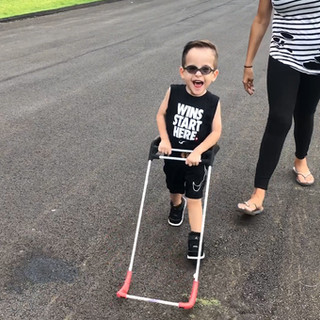
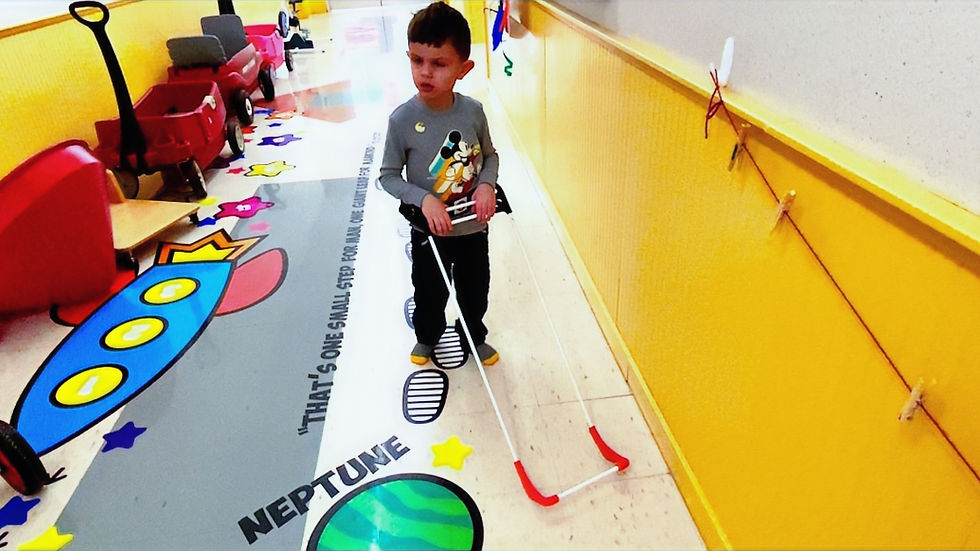
The Pediatric Belt Cane is designed to offer extended touch feedback, which is critical for balance, protection, and spatial awareness. Unlike traditional canes that children are unable to hold and sweep, the Belt Cane frame is easily attached at the child’s waist, giving a constant sense of the environment ahead.
This design allows children to:
Maintain balance on uneven or changing surfaces.
Detect obstacles and changes in terrain early.
Use their hands freely for play, climbing, or carrying objects.
Engage socially without the barrier of holding a cane.
By providing continuous environmental information, the Belt Cane helps children build a mental map of their surroundings, which is essential for independent movement.

Adventure Walks: Building Real Orientation Skills
Adventure walks are simple but powerful tools for teaching children with an MVI/B how to understand and navigate their environment. These walks are everyday experiences slowed down intentionally to let children explore through movement and touch.
Using the Pediatric Belt Cane during adventure walks offers several benefits:
Continuous environmental preview: The cane frame extends forward to contact objects or changes in terrain, helping children anticipate and adjust.
Spatial relationship understanding: Children with an MVI/B learn how objects relate to each other in space, improving their ability to navigate complex environments.
Confidence building: Repeated exposure to new settings with the cane builds trust in their mobility skills.
For example, a walk through a neighborhood park might include feeling the difference between grass, pavement, and gravel, hearing the sounds of birds or water, and recognizing landmarks by touch or sound. These experiences help children connect sensory information with spatial concepts.
Integrating Mobility Into Everyday Summer Activities
Summer offers many natural opportunities to practice mobility skills beyond formal lessons. The Pediatric Belt Cane supports children in:
Playgrounds: Navigating slides, swings, and climbing structures while keeping hands free.
Family outings: Moving through grocery stores, markets, or festivals with ease.
Beach trips: Feeling the texture of sand and water edges safely.
Neighborhood exploration: Walking sidewalks, crossing streets, and visiting friends.
Each activity encourages children to apply orientation and mobility skills in real contexts, making learning meaningful and lasting.
Supporting Motor Development and Social Interaction
The freedom the Pediatric Belt Cane provides allows children to use their hands for more than just holding a cane. This freedom supports:
Motor skills: Climbing, carrying toys, or using playground equipment.
Social play: Engaging with peers without the physical barrier of a handheld cane.
Exploration: Touching objects, picking up items, and interacting with the environment.
These aspects are crucial for overall development and help children feel included and confident in social settings.
Tips for Parents and Caregivers
To maximize the benefits of the Pediatric Belt Cane during summer, parents and caregivers can:
Support children with an MVI/B in using the Belt Cane consistently throughout the day to build familiarity and confidence.
Encourage regular outdoor exploration wearing the Belt Cane in varied environments.
Use adventure walks wearing the Belt Cane as opportunities to talk about surroundings and describe textures, sounds, and spatial relationships.
Combine orientation strategies with fun activities like treasure hunts or nature walks wearing the Belt Cane.
Collaborate with orientation and mobility specialists to tailor activities to the child’s needs.
Looking Ahead: Building Independence Through Experience
As we look ahead, it's essential to remember that every summer adventure is a chance for growth. The Pediatric Belt Cane not only aids in mobility but also fosters independence. By engaging in various activities, children can develop their skills and confidence.
Embracing New Experiences
Encouraging children to try new things is vital. Whether it's a new park or a different playground, each experience adds to their understanding of the world. The Pediatric Belt Cane can be a trusted companion on these journeys, providing the necessary support.
Connecting with Nature
Nature offers endless opportunities for exploration. From feeling the texture of leaves to listening to the sounds of birds, every moment can be a learning experience. The Pediatric Belt Cane allows children to engage with their environment fully.
Building Social Skills
Summer is also a time for social interaction. Children can engage with peers, share experiences, and play together. The Pediatric Belt Cane helps remove barriers, allowing for more natural interactions.
Conclusion: A Summer of Growth
In conclusion, summer is a season rich with opportunities for children with MVI/B. The Pediatric Belt Cane is an invaluable tool that supports their journey towards independence. By embracing the summer months, we can help these children thrive, learn, and grow.
Let’s make this summer a time of exploration and joy, ensuring that every child has the chance to experience the world around them.


Comments