


Preparing Your Child with MVI/B mobility for the First Day of School: A Checklist
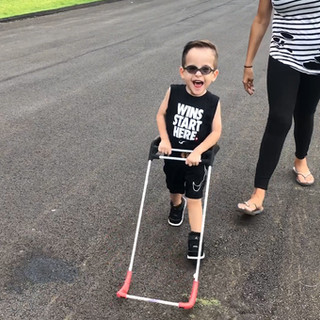
School mobility readiness doesn't begin when the school doors open. It begins during everyday adventures all summer long.
The first day of school is a big transition for every child. For a child with a mobility visual impairment or blindness (MVI/B), school mobility readiness means learning how to move through busy hallways, classrooms, playgrounds, cafeterias, bus areas, and social spaces with confidence. The good news is that families do not have to wait for the school building to open to begin preparing.
Some families will be invited to kindergarten orientation, Meet-the-Teacher Night, Open House, schedule pickup, or a classroom visit before school starts. Other families may not have access to the building until the first week. Both situations can work. School mobility readiness is not a one-day event; it is a process built through everyday practice, thoughtful routines, playful exploration, and communication with your child’s school team.
Before School Opens: Build School Mobility Skills at Home, in the Yard, and in the Neighborhood
Weeks before school begins, families can use familiar spaces—inside the home, in the backyard, on the sidewalk, and at the neighborhood playground—to practice skills that transfer directly to the classroom and school yard. A hallway can become a school hallway. A kitchen table can become a classroom table. A backyard gate can become a playground boundary. A neighborhood playground can become a low-stress place to practice the same listening, waiting, moving, and problem-solving skills your child will use at school.
The advantage of practicing before school opens is that there is no school-day clock yet. You and your child can slow down, pause, laugh, repeat, and check for understanding. This is the time to make mobility feel playful and positive: “You are getting ready to be a big boy at school,” or “You are learning big-girl travel skills.” Low-stress preparation helps children connect movement with confidence, independence, and fun.
Use the Pediatric Belt Cane during these outings so your child with an MVI/B can practice receiving extended touch feedback from the space ahead.
Orientation skills
Use hallways, bedrooms, the kitchen, the bathroom, and the front door to practice finding entrances, exits, doorways, seating areas, sinks, storage spaces, and familiar routes.
Walk through large buildings and practice locating and naming entrances (front, back, side, main), hallways (main, intersecting), doors (braille signage and other distinguishing features), elevators, stairs, restrooms, seating areas, and exits.
Ask orientation questions and model good answers: Example,
“How do you know its the door you were looking for?”
I feel the braille sign says Library,
These electric doors sound right for the library and when you go inside it is quiet and smells like books.
Practice opening and closing doors, moving through thresholds, and navigating around tables, chairs, displays, backpacks, and other furniture.
Talk through what your child is noticing: floor changes, echoes, door sounds, ramps, steps, crowds, landmarks, and what the Belt Cane is touching. “How will you know its the door you were looking for?”
Practice using voiceover technology to access orientation apps and other phone features.
Talk through what your child is noticing: floor changes, echoes, door sounds, ramps, steps, crowds, landmarks, and what the Belt Cane is touching.
Belt Cane skills
Use the Pediatric Belt Cane during home, backyard, sidewalk, and playground practice so your child can learn how extended touch feedback works in familiar places before using it in school spaces.
Practice opening and closing bedroom, bathroom, closet, pantry, screen, and exterior doors; moving through thresholds; and navigating around tables, chairs, toys, laundry baskets, backpacks, and other household furniture.
Pause when the Belt Cane contacts an object, doorway, curb, furniture, or change in surface. Help your child notice: “What did the Belt Cane find?” “Do you want to touch it or keep going?” “How will you know its the door you were looking for?”
Practice using the cane frame to maintain personal space during conversations with family and friends.
Generalizable skills
Have your child carry a backpack while walking so they learn how the extra weight changes balance, posture, and space awareness.
Practice walking near other children or family members so your child can experience footsteps, voices, movement, and changing personal space.
Build endurance with backyard games, sidewalk walks, trips to the mailbox, walks around the block, and repeated visits to the neighborhood playground.
Practice school-like routines at home and in the community: standing in line with family members, waiting for a turn on playground equipment, finding a seat at the kitchen table or picnic table, and staying oriented in a busy play space.
Self-Advocacy skills
Teach simple self-advocacy phrases such as, “Please tell me if the door is ahead of me or if I should turn to the right or left to locate it,” “I need more time,” “Please do not pull me,” “My Belt Cane helps me find what is ahead,” and “I can try it myself.”
Pediatric Belt Cane Readiness
If your child with an MVI/B already uses a Pediatric Belt Cane, begin the school routine before the first day. The Belt Cane should be fitted properly, worn consistently, and used during ordinary movement—not only during formal lessons. Children with an MVI/B learn best when mobility protection becomes part of walking, playing, exploring, and participating. The Belt Cane extended touch feedback helps your child with an MVI/B discover information about the space ahead before their body reaches it.
Check that the belt is secure and comfortable over the clothing your child will wear to school.
Practice walking with the Belt Cane while wearing a backpack, jacket, or other school clothing.
Make sure your child can independently sit, stand, turn, stop, and start while wearing it.
Practice moving around furniture, toys, doorways, curbs, ramps, and busy spaces.
Allow extra time after the Belt Cane touches something. Give your child a chance to stop, think, reach, step around, back up, ask a question, or try again.
Practice words for what the Belt Cane finds: “chair,” “wall,” “door,” “step,” “curb,” “person,” “table,” “trash can,” “line,” “open space,” and “busy space.”
Practice playful problem-solving: “The Belt Cane found a chair. Should we go around it, move back, or find another way?”
Pack any needed parts, labels, or written instructions for school staff.
Share a simple explanation: “My child is blind and this is my child’s mobility tool. It is essential as it provides information about the space ahead so he/she can move safely and independently.”
During School Orientation or Open House: Use the Building Time You Have
Many schools offer one or more opportunities before the first day, such as kindergarten orientation, Meet-the-Teacher Night, Open House, new student orientation, schedule pickup, or classroom visits. If your school offers one of these events, use the time for practical travel—not just introductions.
During these events, it can be tempting to rush from place to place. When possible, slow the pace. Let your child with an MVI/B wearing the Belt Cane to take a little extra time to gather information, pause after contact, ask questions, and repeat short routes. A five-minute route practiced calmly may be more useful than a fast tour of the whole building.
Practice walking from the main entrance to the classroom.
Use the child's classroom as the "start point" for locating key destinations such as: nearest restroom, the cafeteria, the nurse’s office, the playground, the bus area, and the car rider line if applicable.
Ask to let your child with an MVI/B explore the classroom before and after it fills with students.
Use either the main door as the "start point" to locating different classroom destinations such as: the child's cubby, locker, desk, table, carpet area, backpack hook, and personal belongings area.
Use the student's desk as the "start point" to locate centers, sink, main door for leaving the classroom, lining up, finding a seat, and moving around chairs and tables.
Let the teacher know that the child with an MVI/B's Belt Cane is supposed to contact classroom furniture, doorways, walls, chair legs, carpet edges, and open spaces. That connection through touch feedback is critical to recognizing locations.
Conduct simple check-for-understanding activities: “Show me the door.” “What did your Belt Cane touch?” “Take me back to your cubby.”
Ask where students of your child's age are to gather in the morning and where dismissal happens in the afternoon.
Help your child to introduce his/her Pediatric Belt Cane to teachers, aides, office staff, bus staff, and playground staff.
Practice self-advocacy phrases with staff, such as “I need more time,” “Please tell me where to go,” and “Please let me try.”
Ask staff to avoid moving your child by pulling, steering, or lifting unless there is an immediate safety concern. Instead, encourage clear verbal information, consistent routes, and support from the Orientation & Mobility Specialist.
Classroom Travel Checklist
Many classroom travel skills can begin at home. Practice moving from the front door to a table, from a chair to a backpack hook, from the hallway to the bathroom, and from a play area to a cleanup spot. These simple routines help your child understand routes, landmarks, furniture, personal belongings, and transitions before those same ideas appear in the classroom.
Can your child find their seat or table after practicing with a kitchen chair, dining table, child-size table, or picnic table?
Can your child move from the door to the desk, carpet, cubby, sink, and classroom materials?
Are walkways clear enough for mobility tools?
Does each room have a consistent layout?
Does your child know what to do if a chair, toy, backpack, or stool is in the path?
Can your child enter and exit with the group during busy transitions?
Playground Readiness Checklist
Identify playground boundaries, gates, fences, steps, ramps, curbs, mulch, pavement, grass, and equipment zones.
Practice moving from the playroom or exit door to the playground and back.
Teach your child where to wait for adults, where to line up, and how to return to the group.
Discuss safe ways to explore swings, slides, climbing structures, balls, running games, and open space. Use your words, I'm going to start walking towards the swings.
Work on building complex Belt Cane skills on the playground slide and other equipment to learn about your child’s mobility needs and Belt Cane use.
Make a plan to help teach other adults how to support inclusion of your child with an MVI/B without preventing independent movement and play.
Communicating With the IEP Team
Mobility belongs in the school day—not only in therapy time. Share what your child can do, what they are learning, and what support helps them move with confidence. Ask the team to think across the entire day: arrival, classroom routines, specials, restroom trips, lunch, recess, assemblies, emergency drills, dismissal, and field trips.
It may help to explain that Belt Cane skills develop through repeated experiences. When adults rush, redirect too quickly, or move the child’s body for them, the child may miss the chance to interpret extended touch feedback and make a decision. Ask the team to build in time for your child to notice, think, communicate, and try.
Make sure the IFSP/IEP lists the mobility tool and includes Orientation & Mobility services, consultation, route practice, and staff training.
Document how the Pediatric Belt Cane will be used throughout the day and who will support consistent use.
Request that staff learn how to give useful verbal information without taking over your child’s movement.
Ask the team to allow extra time during transitions, route learning, playground exploration, arrival, dismissal, and unfamiliar routines.
Explain that the child with an MVI/B may need time to process Belt Cane contact, identify what was touched, and decide what to do next.
Offer to demonstrate how child accesses the playground
Request plan for accessing bus routines, cafeteria travel, classroom layout, emergency drills, and transitions.
Share a short one-page profile that includes your child’s strengths, communication style, mobility tools, favorite motivators, self-advocacy phrases, and safety needs.
Clarify who teachers should contact if staff have questions.
Final Thought: Readiness Grows Through Repetition
Your child with an MVI/B does not need to master the whole school before the first day. They need repeated chances to move, explore, listen, problem-solve, communicate, and participate. Whether you practice in a library before school opens, walk the building during Open House, or learn routes during the first week, each experience builds the same foundation: confidence, safety, independence, and belonging. When preparation is slow, playful, and encouraging, children begin to see mobility as part of becoming a capable “big kid” at school.
Belt Cane Back to School Guide: Five-part Series
Links
Article 2: Preparing Your Blind Child's mobility for School (current article)
Article 3: Why Extended Touch Feedback Matters at School
Article 4: From Classroom to Playground: Helping Blind Students Keep Up
Article 5: Writing Better IEP Mobility Goals for Independent School Travel


Comments