top of page


Balanced, Protected, and Informed O&M for Active Daily Living
Dr. Grace Ambrose-Zaken


Why the Cane Frame Needs to Be Obvious
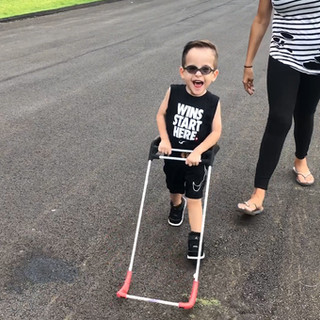
The cane frame is obvious for a reason. The See My Cane Frame campaign helps sighted people understand why visible Belt Canes give blind children clearer next-step confidence, protected personal space, and pride in moving independently.
Grace Ambrose-Zaken
Aug 11


Celebrate Mother's Day with Our Heartwarming Video and Support a Great Cause
Mother’s Day is a special time to honor the incredible role mothers play in our lives. This year, we invite you to experience a touching video that captures the essence of motherhood. The video shows mothers around the world helping their blind children with Belt Canes, simple yet powerful moments that highlights a mother's care, patience, and love.
Grace Ambrose-Zaken
May 9


What Is the Goal of the Push Toy for MVI/B Toddlers?
Where Push Toys Fall Short
Push toys were never designed as mobility tools. And when you look at them through that lens, the limitations are obvious:
They don’t travel well (try fitting one in a car or airplane)
They don’t function in real environments (grass, gravel, uneven terrain)
They’re difficult to steer and control
They don’t fit into daily life (classrooms, tight spaces)
They offer no practical strategy for stairs
Grace Ambrose-Zaken
Mar 22


Understanding Blind Walking: How Extended Touch Enables Balanced Walking
Mobility tools (Belt Cane, rectangular cane, long cane, and human guide) all share a common feature, they provide body-to-device-to-surface link. They allow the blind person to touch the ground ahead this additional sensory information helps stabilize walking in much the same way vision does. When a cane touches the ground, it sends signals to the brain about the surface and body position, acting as an extension of the sensory system.
Grace Ambrose-Zaken
Jan 28


Discover How Pediatric Belt Canes Transform Mobility
Mobility tools for children with a visual impairment are specially designed to meet their unique needs. Unlike adults, children require devices that are lightweight, easy to handle, and adaptable to their smaller frames. The pediatric mobility tool category includes various aids, but the Belt Cane has gained attention for its practical benefits.
Grace Ambrose-Zaken
Jan 8


Supporting Mobility with Pediatric Belt Cane
A Pediatric Belt Cane is designed specifically for children who need assistance with mobility. Unlike traditional canes, which can be cumbersome or difficult for small hands to manage, the Pediatric Belt Cane offers a hands-free solution. It wraps securely around the child’s waist, allowing the cane frame to be attached and easily accessible without the child having to hold it constantly.
Grace Ambrose-Zaken
Dec 18, 2025


Empowering Mobility with Pediatric Mobility Aids: A Guide to Belt Canes and More
When a child faces challenges with vision, mobility becomes a crucial part of their independence and confidence. Pediatric mobility aids are designed to support children in navigating their world safely and effectively. These tools are not just devices; they are bridges to freedom, exploration, and self-reliance. Today, I want to share insights about one such essential aid and the broader landscape of pediatric mobility aids that empower young lives.
Grace Ambrose-Zaken
Dec 11, 2025


Why Pediatric Belt Canes Improve Mobility: A Guide to Pediatric Mobility Aids
When it comes to helping children with visual impairments navigate the world safely and confidently, the right tools make all the difference. Pediatric mobility aids are designed specifically to meet the unique needs of young users. Among these aids, one stands out for its practicality and effectiveness: the pediatric belt cane. This tool is more than just a cane; it’s a bridge to independence, safety, and confidence for children learning to move through their environment.
Grace Ambrose-Zaken
Dec 1, 2025


Thankful for Pediatric Belt Canes Supporting Early Mobility
Mobility tools for children with visual impairments or blindness are tailored to their unique needs. Unlike adult devices, pediatric tools consider size, weight, and the developmental stage of the child. The Pediatric Belt Cane is a perfect example. It’s lightweight, easy to handle, and designed for children.
Grace Ambrose-Zaken
Nov 28, 2025


The Benefits of Pediatric Belt Canes
Safety is paramount when it comes to overseeing the education and play of young children. The Pediatric Belt Cane plays a crucial role in reducing risks associated with immature cane handling. When a cane is dropped or misplaced, the child may be vulnerable to tripping or losing orientation. The belt eliminates these hazards by keeping the cane firmly attached.
Grace Ambrose-Zaken
Nov 24, 2025


Your Blind Child Isn’t being “Bad” — The Cane Is Too Difficult to Swing Each Step
If your blind child resists using their cane, it’s not defiance — it’s design. Many young children struggle to swing a traditional long cane safely or effectively. Learn the five signs your blind child’s cane or mobility device isn’t right and discover how the Pediatric Belt Cane can help them walk confidently, safely, and independently.
Grace Ambrose-Zaken
Nov 4, 2025


🧭 Navigating with Confidence: The Role of Pediatric Belt Canes in Empowering Children with Visual Impairments
Children begin learning to navigate their world from the moment they start moving. For children with blindness or mobility-related visual impairments, this process can be more complex — but no less vital.
Traditional mobility tools like long canes often aren’t introduced until school age, which can delay critical stages of physical and cognitive development. The Pediatric Belt Cane, however, provides the tactile input needed to safely begin independent movement as early as 1
Grace Ambrose-Zaken
Sep 17, 2025
bottom of page