


What’s the Difference Between a Pediatric Cane and an Adult Cane?
By Grace Ambrose-Zaken, Ed.D., orientation and mobility specialist and inventor of the Pediatric Belt Cane
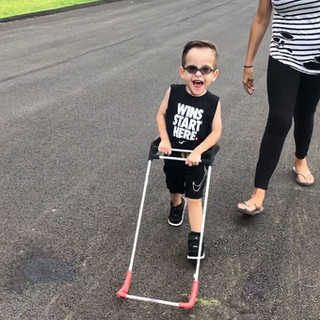
A child-sized long white cane is a shorter version of a handheld mobility cane. A Pediatric Belt Cane is a wearable white cane with a fitted belt and a rectangular frame that stays in front of the child as they walk. Both offer information through touch. The difference is how the cane gets into position to check the path ahead.

With a handheld long cane, the traveler moves the tip across the path while walking. With a Belt Cane, the belt keeps the cane frame aligned in front of the child. As the child moves forward, the two omni-wheel tips roll along the floor and can contact obstacles ahead of their feet.
Feature | Handheld long white cane | Pediatric Belt Cane |
How it’s used | The traveler holds the cane and moves the tip to check the path ahead. | The child wears a fitted belt that positions a two-tip frame in front of them. |
What the learner practices | Coordinating cane movements with steps and responding to what the tip finds. | Responding to what the frame finds while practicing standing, stepping, turning, or walking. |
What determines the fit | An orientation and mobility specialist considers the traveler’s height, reach, and how they use the cane. | Safe Toddles uses body measurements to fit the belt and frame. During walking, the frame should stay in front of the child. |
What Addie’s hallway walk shows
Addie was 7 and had cerebral visual impairment (CVI) and a motor impairment. In the first clip, watch what her teacher is doing. Addie is holding and trying to swing her long cane, and her teacher holds her other hand and helps pull her forward. Then watch Addie in the Belt Cane. She stands more upright and walks down the hallway independently.
When I watch a comparison like this,I pay attention to who initiates the next step. Notice how much help Addie needs to move forward in each clip and how her posture changes when the cane frame stays in front of her as she walks.
Why access to touch feedback matters for learning to walk
A child may use a short white cane to tap a toy or explore a surface while standing still. For independent walking, the child needs information about the path ahead over a series of steps. Can they find the edge of a rug before their foot reaches it? Can they pause or change direction in response to what they feel?
In his 1996 review of preschool orientation and mobility, S. Leong described how advocates of early long-cane instruction drew largely on teaching experience. The research I’ve reviewed has yet to establish consistent use of a handheld long cane to check the path ahead during independent walking in children born blind. Read Leong’s review
In my study of 562 intake forms for children whose families or providers were seeking a Belt Cane, walking with assistance was the most commonly reported way of getting around. On 112 forms, difficulty using other mobility tools correctly was cited as a reason for seeking a Belt Cane. Read Beyond Hand’s Reach
In my practice, I see delayed access to extended touch feedback as a contributor to delays in independent walking. A child needs the strength and coordination to take a step and information about where that step will land. If the cane tips contact a rug edge first, the child has a chance to pause, shift their weight, or lift their foot before reaching it. When access to that feedback is delayed, the child loses opportunities to practice those adjustments during everyday movement.
How do I know which Belt Cane size fits?
Start with your child’s measurements. If their waist circumference is 26 inches or more and their hip width is 10 inches or more, check the Big-kid Belt Cane sizing options. If only one measurement meets that threshold, ask a Safe Toddles sizing expert to help you select the fit.
Once your child is wearing the Belt Cane, watch them take a few steps. The frame should stay in front of them as they walk. If it repeatedly shifts to one side, ask Safe Toddles to review the fit.


Comments