


The Belt Cane Balance Advantage: The Walking Solution Parents Have Been Looking For
Updated: Feb 26
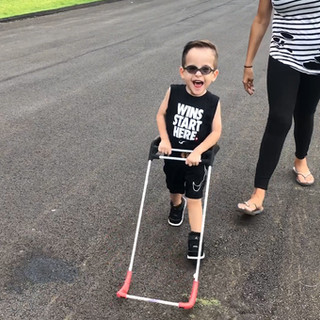
Today, Clinical Ophthalmology published results of a recent pilot study The Role of a Pediatric Belt Cane in Children with Cerebral Visual Impairment. This study used smartphone videos from 11 children diagnosed with Cerebral Visual Impairment (CVI). The children were observed at baseline and again after eight weeks of using a Pediatric Belt Cane. The results showed that using the Belt Cane improved gait speed, along with supportive improvements in step length and foot mobility.
Walking on two feet, known scientifically as bipedal ambulation, relies heavily on unaltered sensory feedback. Every step a child takes depends on continuous information from their body and environment. This feedback is crucial for maintaining balance, orientation, and safety.
For sighted toddlers and preschoolers, vision is the dominant sense for balance while walking. They constantly use visual cues to judge distance, surface changes, obstacles, and drop-offs. This reliance on vision explains why sighted children struggle to walk confidently while blindfolded—vision plays a far more significant role than many realize.
For blind children and those with a mobility visual impairment (MVI/B), vision cannot fulfill this role. Instead, touch becomes their primary sense for balance and safe movement.

Why Vestibular and Proprioception Are Not Enough
Many parents are told that balance comes from the vestibular system or proprioception. While these systems are important, they are not enough for walking safely in a changing environment.
We can see this clearly in how blind children navigate their surroundings:
They hold hands tightly (relying on touch).
They walk along walls (using touch).
They cruise furniture well past the typical developmental age (again, relying on touch).
These behaviors are not delays or habits; they are adaptive strategies. Children use their dominant sense of touch to create the balance information that their vision cannot provide. In other words, the child isn’t resisting walking. They’re using the feedback that makes their walking feel balanced.
Touch Is the Missing Piece
For sighted children, vision provides balance information. For blind children, touch serves that same purpose.
This is where the Safe Toddles Belt Cane Balance Advantage changes the game.
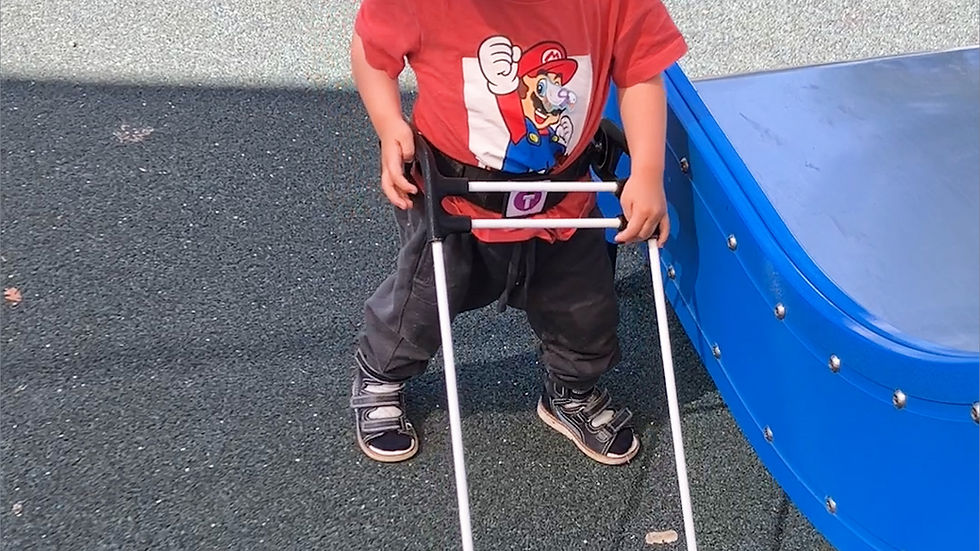
The Belt Cane allows a blind child to “take the couch with them.” It provides a mobile, extended source of touch feedback—like a third leg—that moves with their body throughout the day.
Instead of needing to stay near walls, furniture, or adult hands, the child can carry reliable balance feedback wherever they go.
How the Belt Cane Creates Balance Through Touch
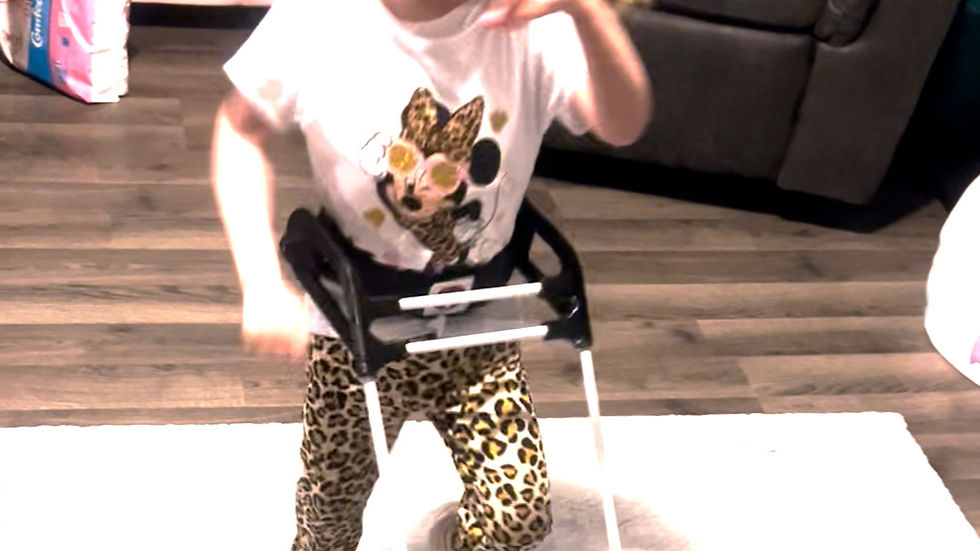
The Belt Cane offers enhanced touch feedback in a rectangular shape in front of the child’s body. This design allows the child to continuously inspect the space ahead through touch, creating a stable and predictable path forward.
As the child moves:
The rods transmit vibrations through touch.
The child receives clear information about the environment ahead.
This feedback communicates essential information to the child:
Stop—the path is blocked.
Slow down—uneven or bumpy surface ahead.
Turn away—obstacle detected.
Prepare—a drop-off or step is coming.
This constant feedback enables the child to stay upright, oriented, and confident—without relying on vision or adult physical guidance. Adults can let go and start playing chase or engaging in other fun early childhood movement games.
Why Belt Canes are a Balance Advantage
Sighted children use vision for balance during play, exploration, and social movement. Blind children gain an equivalent advantage through enhanced and extended touch.
The Belt Cane Balance Advantage provides blind toddlers and preschoolers with:
Continuous balance feedback.
Predictable movement.
Confidence to walk independently.
The ability to confidently join peers in play, exploration, and daily life.
The Belt Cane is a walking solution designed for real life.
Walking Changes Everything
When walking feels safe, children move more. Increased movement leads to more learning opportunities. When MVI/B children receive the right sensory support, they stop holding back and start joining in.
The Safe Toddles Belt Cane Balance Advantage gives MVI/B children what sighted children already have: the sensory information they need to walk confidently, independently, and alongside their peers.
Conclusion: Embracing New Opportunities
As parents and caregivers, we must embrace tools like the Belt Cane. They empower our children to navigate their world with confidence. By providing the right support, we can help them thrive, explore, and engage in life fully.
In this journey, let's remember the importance of touch as a vital sense for balance. It opens up a world of possibilities for children with mobility visual impairments or blindness. Together, we can create an environment where every child feels safe and supported in their movement.


Comments