


Personal Space for Blind Toddlers: The Independence We Rarely Talk About
Most of us take personal space for granted. We stop before we bump into another person. We decide whether to shake hands, give a hug, stand back, or walk away.

We control when and how we make contact. That's personal space and blind toddlers have been without it for far too long. Blind kids don't stop walking forward until there is a bump. Before the Belt Cane there was no mobility device enforcing their personal space and stopping them before bodily collisions occurred.
Without a Belt Cane its a shoulder bump. A hand reaching out unexpectedly. A face meeting someone's leg.
The blind child needs the structure of the cane frame to provide them the opportunity to choose whether to touch or steer clear.
Children grow in the space between themselves and the adults who love them. The Belt Cane helps create that space.
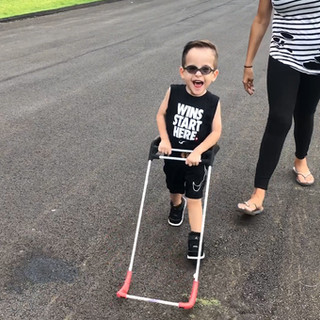
Pictured in this blog, Charna and Phoebe, are two blind girls who benefited from the freedom and protection provided by a Belt Cane. Charna received her Belt Cane at age 2, while Phoebe received hers at age 7. At age 3, we see Charna walking independently alongside her two sisters on their way to the park to play together.
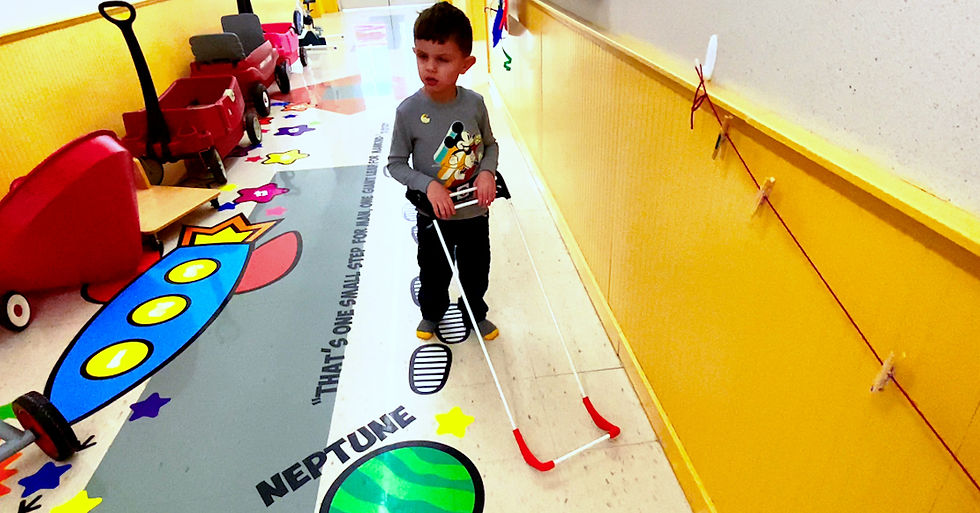
By the time Phoebe was 7, she had reduced the number of solo steps she was willing to take to just three. The simple addition of wearing a Belt Cane helped her transition from depending on a guide to moving with greater independence.
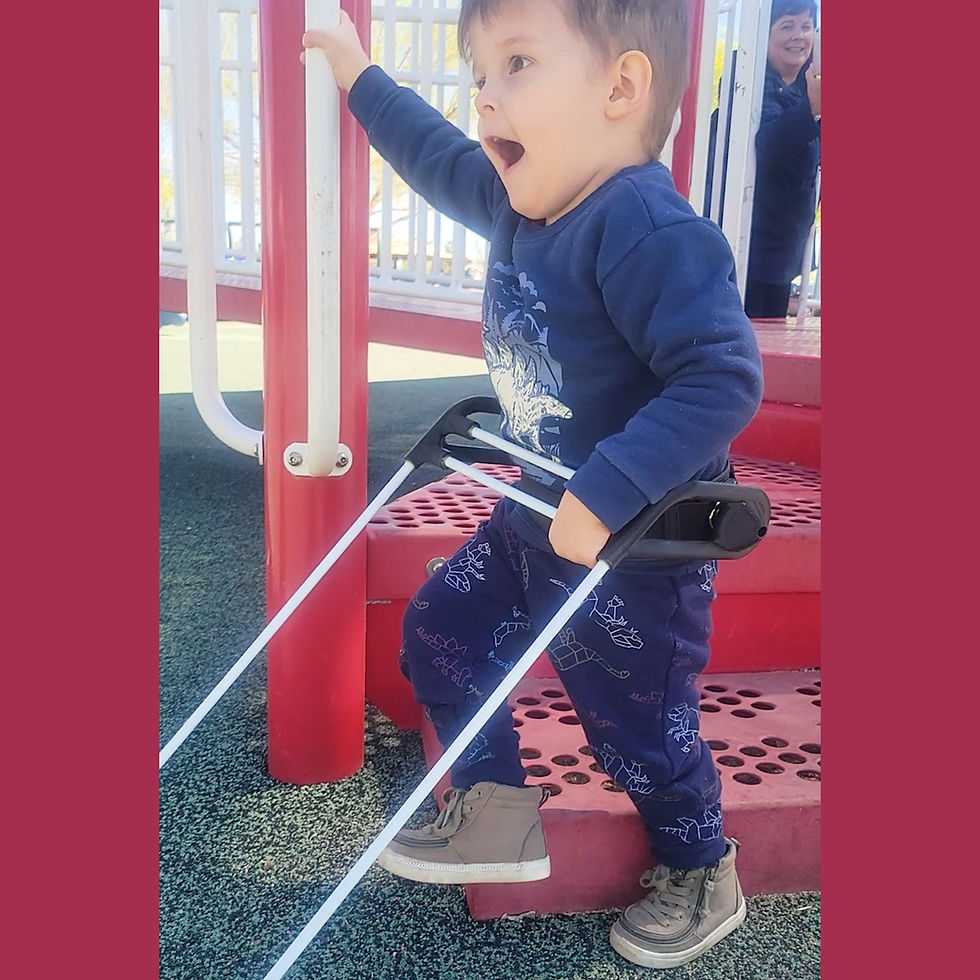
Charna's and Phoebe’s belts keep their cane frames positioned to stop them when they reach another person or obstacle, giving them the confidence and space to let go of their guides. Each Belt Cane stop creates a moment of choice. They can pause. They can turn. They can approach. They can ask for help.
Or they can continue on their own.

This Independence Day, your gift helps provide blind children with something most people never think about:
The freedom to maintain personal space.
The freedom to choose when and how they interact with the world around them.
Because every child deserves the dignity of independence.
Summer gives children endless chances to practice social skills at playgrounds, splash pads, family gatherings, camps, and neighborhood playdates. Sighted children bring their distance vision and with your help blind children can extend their sense of touch for standing in line and taking turns.
One of the earliest social skills children learn in these moments is personal space: how close to stand, when to move closer, and when to step back. Where the cane frame ends is just right social distance for most conversations.
Personal space through mobility tools for social engagement is rarely discussed but incredibly important part of participating alongside your peers, not physically touching—alongside, in front leading the way, or off in a different direction.
Independence is not simply moving. Independence is having the freedom to decide when physical contact happens.
Letting Go is About More than Mobility
For many families, one of the biggest moments is when a child lets go voluntarily—not because they were told to, but because they realize they can.
During the years when social skills are rapidly emerging, the Pediatric Belt Cane can help children experience:
body boundaries,
independent standing,
social spacing,
environmental awareness,
and self-directed movement
That is what makes summer activities more than recreation. They become opportunities to practice friendship, confidence, independent mobility, and personal space in everyday life.
5 Summer Activities for Blind Toddlers to Practice Personal Space
Here are a few simple ways to build personal-space awareness into summer play:
Sidewalk Buddy Walks
Have children walk side-by-side rather than hand-in-hand while talking about what they hear around them.
Playground “Stop and Talk”
Encourage brief conversations between peers before running off to the next activity.

Water Play Conversations
Use sprinklers, splash pads, or water tables where children naturally move in and out of each other’s space.
Backyard Social Circles
Practice standing in small circles during songs, games, or snack time while children maintain independent balance.

Family Greeting Games
Allow the child to decide whether to approach closely, wave, hug, or stand nearby during greetings.
Teaching Personal Space Supports Friendship and Independence
Children with blindness get the opportunity to choose closeness the same way sighted children do.
The Pediatric Belt Cane gives young children with a mobility visual impairment or blindness something many people take for granted: the freedom to stand near someone without needing to hold onto them.
And in a summer full of friendships, games, and new experiences, that small amount of space can make a big difference for social confidence, independent movement, and early friendship skills.

Comments