


You Are Not Alone
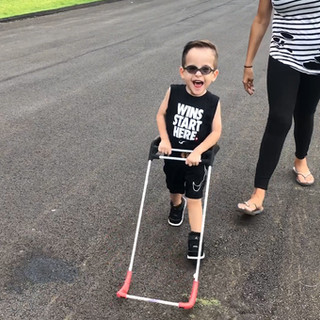
There is a moment many parents don’t talk about out loud.
It’s small at first.
You call your blind child—and they don’t come. You reach for them—and they reach back, but only for your hand. At the playground, they don’t explore. They wait.
And over time, something shifts.
They move less. They initiate less. They rely more and more on you just to get from one place to another.
It can feel like your blind child is the only one.
Like everyone else’s child is moving forward—and yours is quietly falling behind.
And even when you ask for help, the answers don’t quite land. You’re given support, encouragement, adaptations…but not a clear path to independence.
So you start to wonder:
Is it just my child?
It’s Not Just Your Child
We want to say this clearly:
This is the most common experience for children with a mobility visual impairment or blindness (MVI/B).
Across homes, schools, and playgrounds around the world, we see the same pattern:
Children with an MVI/B who hesitate to move independently
Children with an MVI/B who rely on a constant guiding hand
Children with an MVI/B who become quieter, less exploratory over time
Not because they lack ability. But because they haven’t been given a way to move that truly works for them.
And too often, families are left feeling like they are the exception—when in reality, they are the majority.
What If the Problem Isn’t Your Child?
What if your child with an MVI/B isn’t “behind”?
What if they’ve simply been given incomplete tools for something as fundamental as walking?
Children learn through movement. Through going, stopping, turning, reaching, exploring.
When movement is limited, everything else follows.
When Movement Changes, Everything Changes
We’ve seen what happens when children with an MVI/B are given a way to move that supports their body, their balance, and their need for continuous feedback.
They don’t just walk differently.
They:
initiate more
engage more
communicate more
explore more
Independence doesn’t come from being led. It comes from being able to go.
Watch What Happens
Below is a short video created from real families who shared their experiences.
You’ll see the pattern. And you’ll see what happens when that pattern is interrupted.

You Are Not Alone
If you’ve been feeling this—if you’ve been quietly wondering, worrying, or questioning—
You are not alone.
There is nothing wrong with your blind child’s desire to move forward. They just need the right way to get there.
And that is something we can change.


Comments