


White Cane Day: What If We Changed the Game Instead of Asking Blind Children to Leave Their Mobility Tools Behind?
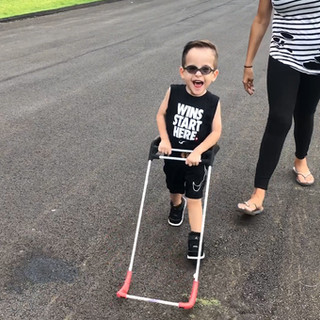
Inclusion should never require a child to choose between safety and participation.
What happens when the rules of a sport require a blind child to leave their mobility tool on the sidelines before stepping onto the playing field?
For White Cane Day, Safe Toddles invites you to look beyond the rules of blind soccer and consider a more fundamental question: Are we adapting activities to meet the needs of blind children, or asking blind children to adapt to activities that were never designed with their needs in mind?
Our new video examines four players participating in blind soccer, including a player who is congenitally blind. Their experiences reveal important differences in how people respond to the loss of visual information—and why those differences matter when we think about the needs of blind children.
Four Players. Four Experiences. One Critical Question.
Sighted adults who put on blindfolds experience a sudden loss of visual information they have relied on throughout their lives. Their movement changes. Their confidence is shaken. Collisions become a real concern. Some remove their blindfolds almost immediately, most are unwilling to play an actual game without visual information to help them maintain balance and avoid other players.
Sighted teenage boys offer another perspective. As they attempt to play without vision, collisions, changes in movement, and uncertainty challenge their confidence. They are discovering just how much they depend on visual information to move safely through a shared space.
Experienced blind athletes such as paralympians, bring a different set of skills and experiences to the game. Their performance, however, should not be mistaken for a realistic expectation of what a child with congenital blindness can do when first learning to move without vision. Someone who lost sight after years of visual experience has a different starting point from a child who has never had that experience.
And then there is the player who is congenitally blind.
For a person who has never relied on vision, navigating the world requires learning to gather and interpret information through other senses. When a sport prohibits the use of a mobility tool, that player faces a particularly important challenge: participating means giving up the only tool that provides them with information about the space ahead.
What are we asking a congenitally blind child to give up in order to play?
The Problem Is Bigger Than Blind Soccer
Blind soccer was developed to make soccer accessible to people who are blind or have low vision. But accessibility deserves continued examination. If the rules prohibit mobility tools because they might injure another player, we must also ask what happens when players cannot detect obstacles or one another in time to prevent collisions.
This is not an argument against blind soccer or the athletes who love it. It is an invitation to question whether existing rules and equipment adequately address the needs of every participant, especially children who are still developing their movement skills.
What if we explored a different approach?
What if we considered a sport in which extended touch feedback could help players detect the space around them and anticipate obstacles? What if we reconsidered the equipment, the playing environment, and the rules together?
What if we called it white cane soccer and designed the game around the mobility tools that blind people use to move through the world?
Changing a name alone would accomplish little. The real opportunity is to change our thinking about what accessible participation can look like.
Blind Children Need Mobility Tools Before They Master the Long Cane
A long cane is an essential mobility tool, but children do not have to wait until they are old enough or skilled enough to use a traditional long cane before they can benefit from extended touch feedback.
Mobility development begins much earlier than that.

Babies and young children who are blind or have a mobility visual impairment need access to environmental information while they are learning to crawl, stand, walk, run, and explore. They need that information not only during formal orientation and mobility instruction, but throughout the activities that make up childhood.
That includes physical activity, daily living skills, sports, recreation, and leisure.
At Safe Toddles, we believe every child with blindness or a mobility visual impairment deserves access to the tools, information, and opportunities needed to develop safe, self-reliant mobility.
The Pediatric Belt Cane was developed to provide extended touch feedback during early movement, helping children access information about the space ahead while they develop their mobility skills. The underlying principle extends beyond one product or one sport: access to environmental information should not depend on a child's ability to use a particular tool independently.
Children need opportunities to move, learn, play, and participate with the tools that meet their developmental needs.
If the Arena Doesn't Fit the Tool, Change the Arena
We routinely adapt environments, equipment, and rules to enable people to participate. We should bring that same willingness to innovation to activities designed for blind children.
If the arena doesn't fit the tool, change the arena.
If the rules of the game exclude mobility tools, change the rules.
If a child needs extended touch feedback to move with greater safety and confidence, don't make participation conditional on leaving that tool behind.
A blind child should not have to choose between safety, fun, and inclusion. And a child should not be welcomed into an activity only on the condition that they surrender a tool that helps them navigate the world.
That is not the inclusion we should be striving for.

This White Cane Day, Let's Change the Rules
White Cane Day is an opportunity to recognize the importance of mobility, self-reliance, and access to the world beyond one's immediate reach.
For blind children, that opportunity begins when they become proficient Belt Cane users. It begins when they first explore their surroundings, learn to anticipate what lies ahead, and discover that they can move through the world with greater confidence through extended touch feedback.
We owe blind children more than an invitation to participate under rules designed without their needs in mind. We owe them the dignity of taking their needs seriously, the respect of listening to their experiences, and the creativity to develop better solutions.
Watch our full White Cane Day video and consider the four players' experiences. Then ask yourself:
What would change if, instead of asking blind children to leave their mobility tools on the sidelines, we changed the game to include them?
Because the goal is not simply to let blind children join in.
It is to create opportunities where they can participate, develop, and move with greater safety and self-reliance—without having to choose between being included and being equipped to navigate the world.
This White Cane Day, let's change the game.
Safe Toddles — Supporting safe, self-reliant mobility from the earliest steps.


Comments