


Stop Underestimating Blind Kids
Updated: Oct 5
# Give Them the Tools and Watch Them Beat Your Estimates
Children with a mobility visual impairment or blindness (MVI/B) learn, explore, move, communicate, solve problems, and develop in their own unique ways. Some may also face additional developmental, motor, cognitive, or sensory challenges that genuinely impact their growth.

But there is one crucial question we should always ask before concluding what a blind child is capable of: Have we given this child adequate access to information about the world around them?
Sighted children receive vast amounts of environmental information simply by looking. They see:
The person across the room.
The toy on the floor.
The step in front of them.
Another child walking around an obstacle.
A new environment that they can visually scan to figure out where things are and how to navigate.
Before deciding what a child with a disability can or cannot do, we must ensure they have the tools and opportunities they need to show us.
Blind children learn through touch—mobility tools extend touch.
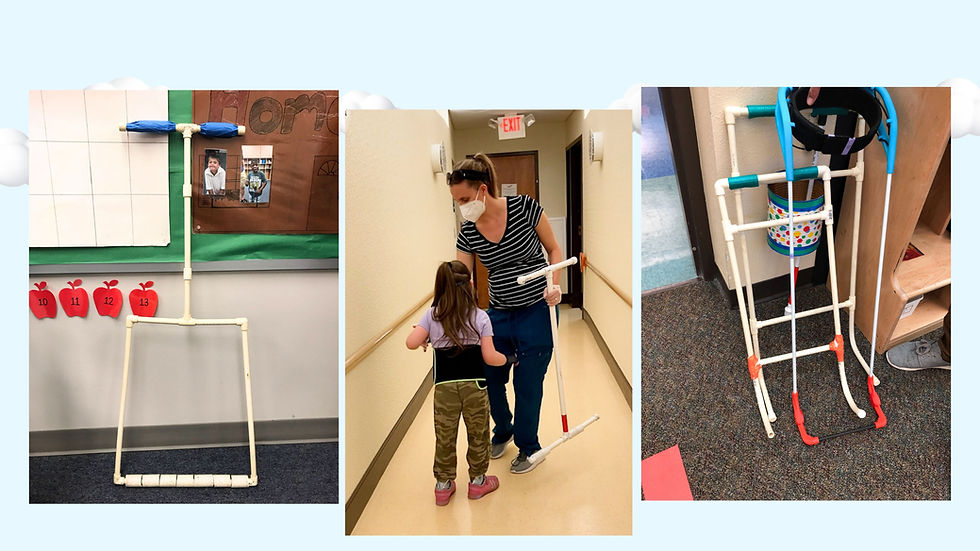
Children with MVI/B gather significant environmental information through touch. Their cane frame helps them to:
Touch the person two steps ahead.
Feel the toy on the floor.
Detect the step in front of them.
Avoid obstacles created by other children.
Tactilely scan a new environment to figure out where things are and find the clearest path.
Blindness or mobility visual impairment means they cannot learn visually. However, vision is just ONE sense; it is not the ONLY sense.
Touch is the primary sense that blind children use to learn about their world. Blindness and mobility visual impairment access the same information through touch.
When we don't extend their touch, we risk underestimating what they can truly do.
Don't Confuse Lack of Access with Lack of Ability
A child with MVI/B who isn't independently exploring may need more information about their environment. Similarly:
A child who isn't walking may require a safer way to discover what lies ahead.
A child who doesn't reach for something across the room may not realize the object is there.
A child who relies heavily on an adult for mobility may simply have had few opportunities to experience independent movement.
None of these observations tells us, by itself, what the child is capable of. They only reflect what the child is doing under the conditions we've provided. That distinction is vital.
Give Them the Tools
Children with disabilities related to vision need tools that allow them to gather information through touch about their surroundings while they move.
They need extended touch to create opportunities to discover surfaces, obstacles, changes in elevation, distances, directions, and the location of people and objects.
They need extended touch to make choices and learn from what happens next.
They need extended touch to be active participants in their environments—not merely transported through them.
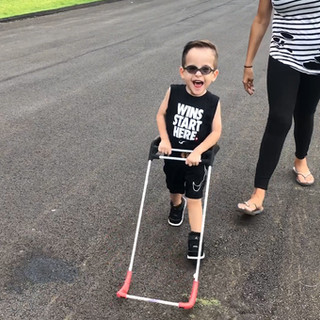
This is one reason Safe Toddles developed the Pediatric Belt Cane. The Belt Cane provides extended touch feedback ahead of the child, helping them receive information about the environment before reaching it with their feet and hands. The belt design keeps the frame positioned appropriately while reducing the burden of tracking a handheld device.
The tool doesn't explore the environment for the child with MVI/B.
The child with MVI/B wearing a Belt Cane explores naturally.
The child with MVI/B wearing a Belt Cane encounters information, responds to it, makes adjustments, and learns. With more opportunities to practice, we can observe abilities that were previously difficult to see.

Then Watch What They Do
When you give a child with MVI/B a Belt Cane for better access to information, everything changes. You will see them:
Explore more.
Move more.
Initiate more.
Gain confidence in trying new things.
Begin solving problems independently.
Sometimes, they even surprise the adults around them. This isn't because the child with MVI/B wearing a Belt Cane suddenly became capable. It's because we finally provided the child with MVI/B a better opportunity to demonstrate those capabilities.
Don't Lower Expectations. Remove Barriers.
This doesn't mean pretending every blind child has the same abilities. They don't. Children have different strengths, developmental profiles, challenges, and rates of development.
The point is not to deny those differences but to ensure we aren't adding unnecessary limitations by failing to provide access.
Before saying, “They can't,” ask:
Have they had the opportunity?
Before saying, “They're not ready,” ask:
Do they have the information they need to participate?
Before lowering expectations, ask:
Have we given them the tools they need to meet those expectations?
Because children with MVI/B can only demonstrate what they have had an opportunity to practice.
Give MVI/B children the tools.
Give them access to information.
Give them opportunities to explore.
Give them time to practice.
And then—watch them beat your estimates.
Conclusion: The Power of Opportunity
In conclusion, providing children with MVI/B the right tools and opportunities is crucial. It empowers them to explore their environment and develop their skills. When we focus on removing barriers and enhancing access, we open a world of possibilities for these children.
We must remember that every child is unique. By embracing their individuality and providing them with the necessary resources, we can help them thrive.
Learn more using our Blind Baby Safe Mobility Curriculum

Comments