


Freedom to Explore: Supporting Children with a Mobility Visual Impairment/blind
Updated: Jul 13
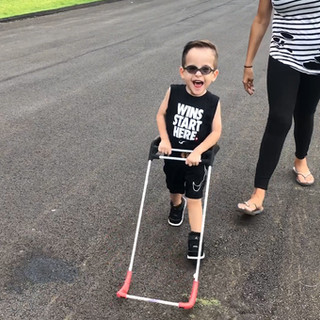
Freedom means having the right to take up space. For 2-year-old Wesley, who is blind due to optic nerve atrophy, the space his Belt Cane frame occupies is not extra. It is essential. This space is vital for his body, his tool, and his growing independence to move confidently through the world.
Understanding the Importance of Mobility Tools
Sighted children see what lies ahead. In contrast, Wesley feels what is ahead. Before he had the Belt Cane, his shins served as his mobility tool. In the picture, on the left, you can see how he finds his toys by banging into them with his shin. This experience is very different from that of sighted children. On the right, wearing the Belt Cane, he receives two steps of warning about the wall in his way.
Wearing the Belt Cane is closer to the sighted child's experience.
He uses the warning that comes from the extended reach of his cane tips on the ground to locate objects before his shins do. Click the video to see Wesley's confidence wearing the Belt Cane.

The Safe Toddles Pediatric Belt Cane is designed to give children with a mobility visual impairment or blindness (MVI/B) a precious two steps of warning. Its cane tips travel first, always ahead, allowing the MVI/B child to make contact with surfaces and obstacles through the extended reach of their mobility tool.
The space a Belt Cane occupies is not extra. It is working space.
That space carved out by the cane tips belongs to the MVI/B child. It gives them time to notice, respond, and either keep moving or stop to engage.
Making Blindness More Visible
The white cane frame extended out in front helps sighted people understand what they may not otherwise see: this child is blind, this child is traveling, and this child needs the space ahead to remain clear.
That white cane frame extended out in front helps sighted people understand what they may not otherwise see: this child is blind and needs the space ahead to remain clear.
For an MVI/B child who is just beginning to explore, this message matters. The Belt Cane provides information to the child and communicates to those around them. It makes blindness more visible in a practical way, helping others recognize that they should pause, make room, and get out of the MVI/B child’s path.
The Right to Space and Movement
This Independence Day, Safe Toddles is asking you to help protect the right to space, movement, and early independence. Your gift helps provide Belt Canes to blind children who need a reliable walking solution designed for their bodies, their development, and their safety.
Your donation helps give a blind child like Wesley:
Two steps of warning from cane tips that are always first ahead.
A clearer way to show sighted people, “I am blind. Please give me room.”
A tool that supports safer, hands-free exploration at home, at school, and in the community.
A chance to move through the world with more confidence, more information, and more independence.
MVI/B children have the right to move. They have the right to explore. They have the right to take up space.
How You Can Help
On July 4, as we celebrate our Independence Day fundraising campaign, please consider making a gift to Safe Toddles. Your support can help provide Belt Canes to children who need them.
Because freedom begins when an MVI/B child has the space and the tools to move forward.

Give Children with an MVI/B the Freedom to Explore
Every gift helps create safer, more independent mobility for children with a mobility visual impairment or blindness.
$25 Introduce a family to Safe Toddles and connect them with resources that support early independence.
$50 Provide educational materials and family guidance that help parents encourage safe, confident exploration.
$250 Help prepare a school team to successfully support a child using a Pediatric Belt Cane.
$500 Help subsidize a Pediatric Belt Cane for a child who needs access to safe, independent mobility.
$1,605 Provide a complete Dual-Cane System for one child, customized for growth and daily exploration.
$2,000 Provide a Pediatric Belt Cane along with family support, professional consultation, and educational resources that help a child succeed at home, school, and in the community.


Comments