


How Video Helps
Updated: Aug 11
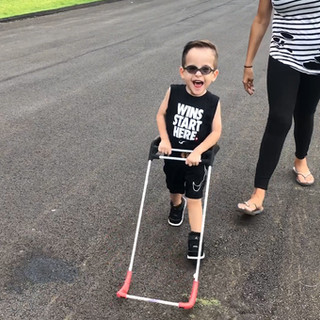
A short video can make your child’s present level of O&M performance visible. It can show how your child travels through familiar routines, responds to obstacles or drop-offs, follows directions, asks for help, and uses the Belt Cane in real settings.
Video does not replace an O&M evaluation. It helps the family, O&M specialist, and team talk about the same evidence: what is working, what is still hard, and what should be taught and measured next.
IDEA requires IEP teams to consider whether a child needs assistive technology devices and services. Assistive technology services can include evaluation, selection, fitting, customization, training, technical assistance, and support for the child, family, and professionals involved with the child.
In plain language: if your MVI/B child needs the Belt Cane to increase, maintain, or improve functional mobility, ask for the device, services, training, and progress monitoring to be written into the IEP or IFSP.
What to Record Before School Starts
Record clips during ordinary moments. Try to capture your child traveling a familiar route with the Belt Cane, such as moving from one room to another, walking to the car, navigating a hallway, stairs, doors, playground, and finding various destinations.
What route did your child travel?
Was the Belt Cane fitted and positioned as intended?
Was your child independent, verbally prompted, physically assisted, or guided?
Did your child detect obstacles, surface changes, stairs, drop-offs, doorways, or people?
Did your child recover after a mistake or ask for help?
What should the O&M specialist teach or measure next?
Add One Sentence of Data
After each clip, write one sentence: “On [date], my child traveled from [start] to [destination] with [level of support], using the Belt Cane to [what happened].” That one sentence can help the team connect the video to present levels, goals, services, and progress monitoring.
Privacy Reminder: Keep videos private. Share them directly with the O&M specialist, service coordinator, or IEP/IFSP team rather than posting them publicly.
Make Sure the Belt Cane is in Writing
Supportive comments are not enough. If the team agrees your child needs the Belt Cane, ask exactly where it will appear in the IEP or IFSP. The plan should make clear what will be provided, who will teach it, where it will be used, how staff and family will be trained, and how progress will be measured.
Assistive Technology: a correctly fitted Belt Cane.
O&M Instruction: positioning, route travel, obstacle response, drop-off response, orientation, and independent movement.
Use Across Settings: classroom, hallways, restroom, playground, cafeteria, field trips, home routines, early intervention settings, and community routines as appropriate.
Training: support for the child, family, teachers, aides, therapists, service coordinators, and mobility staff.
Progress Monitoring: video review, route data, safety events, independence level, and regular progress reports.
Do not leave training in meeting notes only. If training is necessary for safe and consistent use, ask for it to be written into the plan.
Make a Clear Written Request
Share your best video evidence along with a written request for an AT/O&M evaluation or IEP/IFSP team discussion.
Sample Written Request: “I am requesting an assistive technology and Orientation & Mobility evaluation to determine whether my child needs a correctly fitted Belt Cane, related O&M instruction, training, and progress monitoring as part of the IEP or IFSP. I am sharing short private videos that document my child’s current mobility skills and safety needs in familiar routines. Please use this information, along with professional evaluation and team input, to develop measurable goals, services, supports, and training.”
Final Summer Readiness Step
Summer gives families a chance to notice growth before school routines begin again. Maybe your child is exploring more, crossing open space with more confidence, following a familiar route, or using the Belt Cane more consistently. Capture that progress now.
Then ask for what your child with an MVI/B needs next to be written into the IEP or IFSP: the Belt Cane, the instruction, the settings, the training, the measurable goals, and the progress monitoring. If it belongs in your MVI/B child’s daily mobility plan, it belongs in writing.
Call to Action: This week, record one short private video of your child traveling a familiar route with the Belt Cane. Write one sentence about what the video shows. When it is time, request that the IEP or IFSP team meet to consider the Belt Cane, related O&M instruction, training, and measurable goals in writing.
Belt Cane Back to School Guide: Five-part Series
Links
Article 4: Ready for the Whole School Day: Summer Practice with the Pediatric Belt Cane
Article 5: Use Summer Videos to Get the Belt Cane Written Into Your Child’s IEP or IFSP (current article)


Comments